Comprehensive Guide to AI Platforms for Creative Professionals
Explore AI platforms for creative professionals, covering tools, features, and integration strategies to enhance creativity and streamline workflows.
Get the daily AI & tech briefing.
Comprehensive Guide to AI Platforms for Creative Professionals
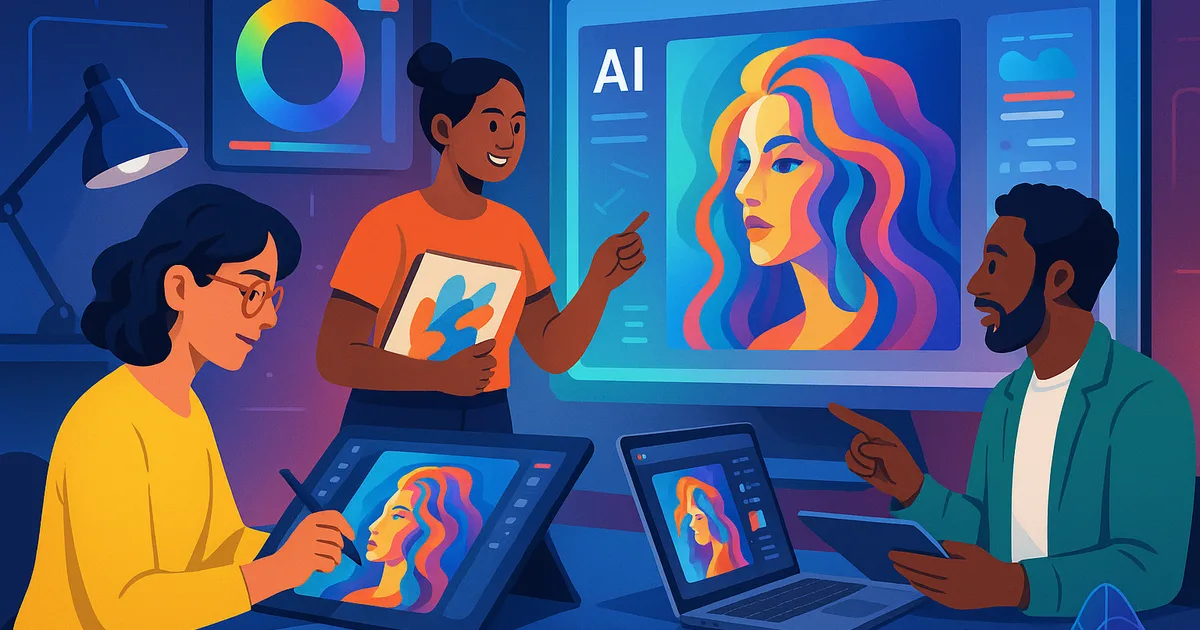
Artificial Intelligence (AI) is reshaping various industries, and the creative sector is no exception. As AI tools become more sophisticated, creative professionals, from designers and artists to marketers and video producers, are finding innovative ways to integrate these technologies into their workflows. This guide explores the fundamental aspects of AI platforms for creative professionals, offering a robust overview that sets the stage for deeper exploration into specific tools, features, and integration strategies.
Understanding AI Platforms in the Creative Industry
AI platforms are technologies that offer various tools and services powered by artificial intelligence. They aid creative professionals by automating repetitive tasks, generating creative content, and offering insights that enhance decision-making. The explosion of AI in this realm has opened new possibilities, from AI-generated art to scriptwriting assistance.
The Growing Role of AI in Creativity
The role of AI in creativity is expanding rapidly. AI algorithms can analyze patterns and trends in data, helping creatives to refine their ideas and approaches. Whether it's transforming sketches into digital images or suggesting edits to enhance video production, AI is proving invaluable. For more on how AI tools are reshaping the creative industry, see Top AI Tools Revolutionizing Design and Art.
AI’s Unique Contributions to Creative Work
AI contributes to creative work by offering capabilities that were previously unavailable. Tools like neural networks can create music, develop visual concepts, and generate narrative arcs for storytelling. This supplements human effort by expanding the creative toolbox.
Challenges and Opportunities
While AI offers tremendous opportunities, it also presents challenges, such as ethical concerns and the fear of machines replacing human creativity. The key is to view AI as a complement rather than a competitor, enhancing human creativity rather than replacing it.
Adapting to an AI-Driven Creative Future
Professionals must adapt by learning these new tools and understanding their applications. Embracing change and staying informed about technological advancements will be crucial for success. To explore essential features that creatives should look for in AI platforms, visit Essential Features of AI Platforms for Creatives.
Top AI Tools Revolutionizing Design and Art
AI tools are revolutionizing the way creative work is done. These platforms offer a range of features, from automating mundane tasks to innovative content creation.
Notable AI Design Tools
Some of the top AI tools in design are transforming how designers approach their work. Tools like Adobe Sensei and Canva's Magic Resize are making it easier for artists to create and manipulate images.
AI in Art Creation
AI art generators like DeepArt and Runway ML provide new ways for artists to experiment. These platforms allow users to apply artistic styles to photographs and create surreal images that push the boundaries of imagination.
Enhancing Video and Animation
AI is also a game-changer in video production and animation. Tools like Synthesia generate videos from text inputs, while tools like Adobe Premiere Pro's AI capabilities automate aspects of video editing.
Aiding Graphic Design
Graphic designers are benefiting from AI platforms like Designhill and Looka, which offer logo creation and design automation, enabling designers to produce high-quality work in less time.
Essential Features of AI Platforms for Creatives
When evaluating AI platforms, creative professionals should consider features that align with their specific needs and workflows.
User-Friendly Interfaces
A user-friendly interface is critical. AI tools should enhance creativity, not complicate the process. Platforms like Canva and Adobe Illustrator prioritize ease of use, allowing creatives to focus on what they do best.
Customizability
Customizability ensures that AI tools meet the unique needs of each project. Platforms like Unity and Amazon Rekognition allow for tailored solutions by offering a range of customizable features.
Collaboration Tools
Collaborative features are increasingly important for creative professionals. AI platforms like Figma and Slack integrate AI to streamline communication and project management, allowing for seamless collaboration across teams.
Integration Capabilities
The ability to integrate with existing software is essential for any AI platform. Platforms that offer APIs and plug-ins, like Zapier and Microsoft Azure, allow creatives to connect tools effortlessly. For best practices on integrating AI into creative workflows, read Integrating AI into Creative Workflows: Best Practices.
Integrating AI into Creative Workflows: Best Practices
Successfully integrating AI into creative workflows involves understanding how to best leverage technology without compromising the creative process.
Identifying Integration Points
Start by identifying where AI fits into your existing processes. Determine which tasks can be automated or enhanced by AI. Platforms like Monday.com help visualize and streamline workflows with AI capabilities.
Balancing Creativity with Automation
Finding the right balance is crucial. Creative professionals should aim to use AI to reduce repetitive tasks, allowing for more time spent on generating ideas and creativity.
Continuous Learning and Adaptation
Technology continually evolves, and staying up-to-date with the latest tools and trends is vital. Professionals can access online courses and tutorials related to AI tools to enhance their skills.
Assessing ROI on AI Investments
Understanding the return on investment for AI tools can justify their inclusion in your workflow. Keep track of time saved and quality improvements to evaluate AI's impact effectively.
Case Studies: Successful AI Adoption by Creative Agencies
Exploring real-world examples provides insight into how AI is transforming creative workflows. For more detailed studies, see Case Studies: Successful AI Adoption by Creative Agencies.
Agency Success with AI-Enhanced Graphic Design
One design agency doubled its output using AI tools for repetitive tasks. By automating resizing and formatting tasks, designers could focus more on creative ideation.
AI-Driven Advertising Campaigns
An advertising firm utilized AI to analyze consumer data, leading to more targeted and effective campaigns. This resulted in higher engagement and conversions.
Video Production Efficiency
A video production company improved efficiency by using AI tools to automate editing workflows, resulting in faster turnaround times and increased client satisfaction.
AI in Illustration and Concept Art
Illustrators benefited by using AI to generate quick mockups and concepts, accelerating the production cycle and opening up more room for creative exploration.
Comparing Popular AI Platforms for Creative Professionals
When comparing AI platforms, it is essential to consider tools, features, ease of use, and cost. For an in-depth comparison, see Comparing Popular AI Platforms for Creative Professionals.
Platform | Key Features | Best For | Pricing |
|---|---|---|---|
Adobe Sensei | Image recognition, AI-driven design tools | Designers, Artists | Subscription |
Canva | User-friendly design platform, logo creation | Beginners, Small Businesses | Free / Subscription |
Figma | Real-time collaboration, vector design | Teams, UX Designers | Free / Subscription |
Unity | Real-time 3D development, customization | Game Developers, Artists | Subscription |
Runway ML | AI art generator, video editing | Artists, Animators | Subscription |
Understanding Pricing Models
Most AI platforms offer tiered pricing models. Understanding what features are available at each level can help creative professionals make informed choices.
Evaluating User Reviews and Feedback
Reading user reviews can provide insights into the strengths and limitations of each platform, helping users choose the one that suits their needs.
Trial Periods and Demos
Utilizing free trials and demos allows creatives to explore platforms without commitment, ensuring it fits seamlessly with their workflow.
Support and Community
Strong customer support and active communities can be invaluable, offering assistance with troubleshooting and creative inspiration.
Future Trends in AI for Creative Professionals
The future of AI in the creative industry is promising, with trends pointing to even more integration and innovation. To learn about upcoming trends, explore Future Trends in AI for Creative Professionals.
Increasing Personalization with AI
AI's ability to personalize experiences is growing. Future tools may provide even more tailored creative solutions based on user preferences and behaviors.
AI Augmenting Human Creativity
Instead of replacing creativity, AI will continue to augment it, offering artist-like creativity at the click of a button, which could lead to surreal art forms and new styles.
Growth in AI-Ethical Design Practices
As AI becomes more integrated, ethical design practices will become crucial. Understanding and implementing these practices will ensure responsible AI usage in creative fields.
The Role of AI in Remote Collaboration
AI will play a major role in enhancing remote work, offering tools that bridge geographical gaps and foster greater collaboration across the world.
Conclusion: Navigating the Future of Creative Artificial Intelligence
As AI technology continues to evolve, creative professionals must stay informed and adaptable. By embracing AI as a collaborative tool, creatives can unlock new potentials, making their work more efficient and innovative.
Frequently Asked Questions (FAQs)
- What are AI platforms for creative professionals?
AI platforms for creative professionals are tools and services powered by artificial intelligence that aid in creating visual art, designs, video content, and more. They help automate tasks and offer new creative possibilities.
- How do AI tools enhance creativity?
AI tools enhance creativity by automating repetitive tasks, providing new forms of inspiration, and offering insights and analytics to guide creative decisions.
- Can AI replace human creativity in the creative fields?
AI cannot replace human creativity but can augment it. AI tools are designed to complement human work by automating processes and providing new insights, thus freeing up more time for creative thinking.
- What should I look for in an AI platform for my creative work?
Key considerations when selecting an AI platform include usability, integration capabilities, customizability, and cost. It’s essential to choose a platform that aligns with your specific needs and workflow.
- How can I integrate AI into my existing creative workflow?
Start by identifying tasks that can benefit from AI. Gradually implement AI tools into your workflow, focusing on areas where they can save time or provide new capabilities. Continuous learning and adaptation will ensure a seamless integration process.
Advanced Techniques in AI-Driven Creativity
As AI continues to evolve, creative professionals must stay on the cutting edge by adopting advanced techniques that maximize the potential of these platforms. One such technique is the use of generative adversarial networks (GANs) to create visually stunning art pieces. GANs make it possible to generate unique images by training two neural networks against each other, producing results that can be both unexpected and innovative. Familiarity with processing these outputs for further refinement can set creatives apart from others using more basic AI tools.
Another advanced technique involves leveraging AI for data-driven design. By analyzing large data sets, AI can identify trends and preferences within target demographics, allowing designers to tailor their work to better meet the needs and expectations of their audience. Understanding how to interpret this data and integrate it into the design process can enhance creativity with strategic insights, ultimately leading to more effective and audience-specific creations.
Finally, creatives can utilize AI for automating mundane tasks, freeing up valuable time for more complex projects. Techniques like natural language processing (NLP) can assist in automating content curation and ideation, allowing creative teams to focus on the core aspects of their work. Mastering automation within AI platforms can streamline workflow and significantly boost productivity, enabling creative professionals to dedicate more energy to innovation and artistic expression.
Common Mistakes in AI Integration and How to Avoid Them
Integrating AI into creative workflows can be transformative, but it's not without potential pitfalls. One common mistake is underestimating the learning curve associated with new AI tools. Many creatives rush to adopt the latest technologies without fully understanding their functionalities. This can lead to frustration and inefficient use of the platform. It's essential to invest time in proper training and exploration, allowing for a smoother transition and maximized benefit from AI tools.
Another frequent error is neglecting to maintain a balance between creativity and automation. While AI can handle repetitive tasks, over-reliance on automation may stifle creativity. To avoid this, creative professionals should regularly evaluate their workflow to ensure that automation enhances rather than hinders innovative thinking. This might involve setting aside dedicated time for brainstorming and manual ideation, maintaining the necessary human touch in creative projects.
Misalignment between AI tools and existing workflows is also a common oversight. It's crucial for creative teams to carefully assess how an AI platform will fit within their current processes before committing. Conducting thorough analyses of compatibility and potential bottlenecks can help to avoid disruptive integrations. By planning for seamless incorporation, creative professionals can harness the power of AI without sacrificing their established efficiency and workflow harmony.
Metrics for Measuring Success in Creative AI Implementation
Measuring the success of AI implementation in creative projects involves more than just assessing productivity gains. One of the key metrics is the quality of outputs, which can be evaluated through client feedback and audience engagement. Creatives should establish benchmarks to compare pre- and post-AI implementation results, focusing on whether the quality and originality of their work have improved with AI assistance.
Time saved is another important measure of success. By automating tedious tasks, AI can significantly speed up project timelines. Tracking how much time is freed up for creative thinking and more complex tasks can provide insights into the efficiency gains brought about by AI tools. This metric can help justify the investment in AI technology by demonstrating tangible improvements in speed and resource allocation.
ROI (Return on Investment) is a crucial metric, especially for agencies and businesses. It involves calculating whether the financial benefits derived from utilizing AI exceed the costs incurred, including software subscriptions and training expenses. Creatives should track completed projects, increased client conversion rates, and expanded service offerings resulting from AI adoption. By doing so, they can clearly demonstrate how AI contributes not only to creative excellence but also to the bottom line.
Related Articles

Don't miss what ships next
The daily briefing on AI & tech, straight to your inbox.
Written by
Zach GreeneI write about the tools, trends, and breakthroughs shaping the future of AI, breaking down complex ideas into clear, actionable insights. From emerging startups to the latest in AI tech, I focus on what actually matters and what’s worth paying attention to. My goal is to help you stay ahead in a rapidly evolving space.