Future Trends in AI for Creative Professionals
Explore emerging AI trends impacting creative professionals, from interactive storytelling to generative art and ethical considerations.
Get the daily AI & tech briefing.
Transformative AI Modeling and Generative Art for Creatives
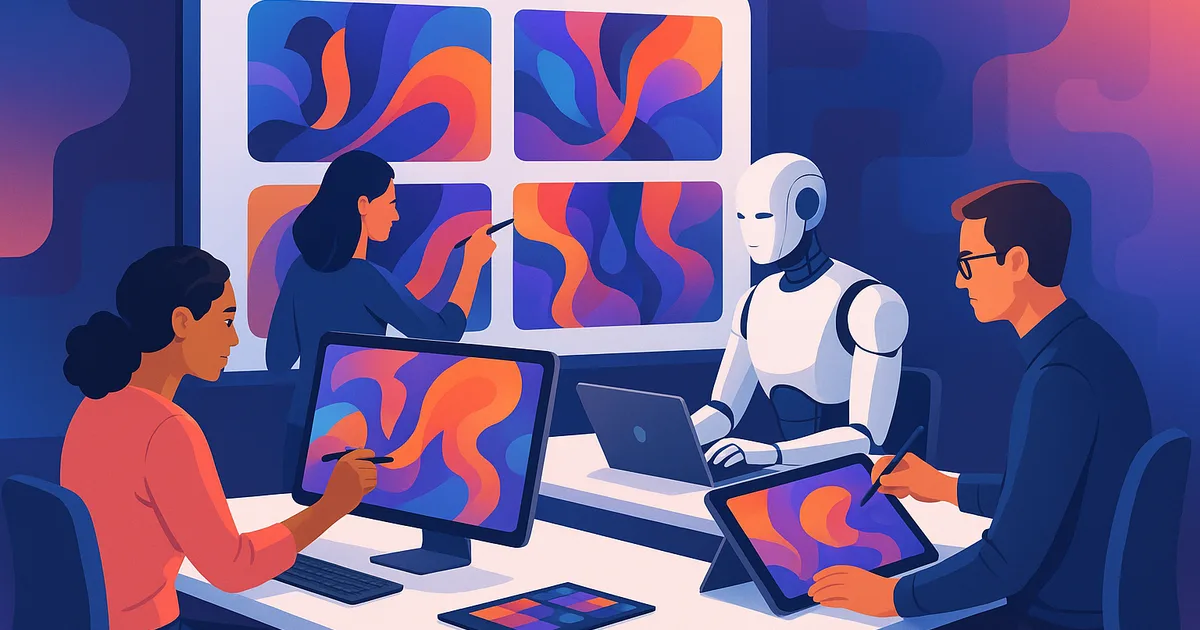
Artificial intelligence continues to reshape the creative landscape. Tools using AI modeling and generative algorithms are becoming indispensable for creative professionals, allowing them to explore new artistic terrains. Technologies like DALL-E and Midjourney are enabling artists to ideate through digital canvases, generating remarkable visuals from textual descriptions.
Generative art harnessed by AI doesn't just replicate human creativity - it transforms it. As these tools develop, creatives can anticipate even more sophisticated features, allowing for varied styles, textures, and refined output control. For instance, artists can customize the mood, color schemes, and complexity of their art pieces, making generative art tools increasingly central to their workflows.
AI-Driven Music Composition: The Next Frontier
AI is making waves in music composition, pushing boundaries beyond traditional creation methods. Platforms like AIVA and Amper Music use AI to compose unique tracks, facilitating creative exploration through the lens of machine learning and offering composers new possibilities in sound design and music production.
As AI music tools advance, expect deeper integration with digital audio workstations, providing seamless transitions between AI-generated loops, themes, and human improvisation. This means musicians can prompt AI to spark inspiration, aiding in creative blocks and accelerating the devising process.
Interactive AI Storytelling: Beyond Automated Writing
Creative writing is entering an era of collaboration with AI that could redefine storytelling. Tools such as ChatGPT and Jasper are more than just writing assistants - they are co-authors. These models help generate plot ideas, character dialogues, and engage in brainstorming sessions with writers.
Future trends point toward more intuitive interfaces where writers can adjust tone, pace, and style dynamically, inviting AI as an interactive partner in storytelling. This potential can lead to richer narratives, as AI bridges the gap between imaginative vision and realized creativity.
AI-Powered Design Tools and Personalization
Design professionals are finding that AI can personalize user experiences more dynamically than ever. Companies like Adobe integrate AI features like auto-editing, automated tagging, and intelligent search into their software suite, maximizing efficiency and precision in design projects.
Future design tools will likely include hyper-personalized features, offering adaptive interfaces that anticipate user needs based on past work patterns. This means faster workflows and more creative flexibility, as AI learns and evolves alongside human designers. Learn more about top AI tools revolutionizing design and art for insights into these advancements.
Here’s a snapshot of some popular AI tools for designers:
AI Tool | Features | Best For |
|---|---|---|
Adobe Sensei | Auto-editing, tagging | Graphic designers |
Canva with AI | Quick design layouts, photo editing | Casual users, marketers |
Figma AI | Prototyping assistance, layout design | UX/UI designers |
The Ethical Dimensions of AI Art and Creativity
As AI impacts art and creative work, ethical considerations become critical. There's an ongoing debate about AI's role in originality and authorship. Creatives must be mindful of dependence on AI-generated content and potential copyright challenges.
Tools are being developed to ensure AI respects artistic integrity and originality. For example, some platforms provide transparency in AI-generated processes, ensuring artists and audiences understand how AI contributes to the work, preserving creative ethics.
How AI Enhances Collaboration in the Creative Industry
AI isn't replacing creativity - it's augmenting it, particularly in collaborative settings. Tools like Slack's integration with AI can streamline communication among creative teams, allowing seamless idea sharing and project management. These enhancements help teams focus on creativity, reducing mundane tasks.
In the future, AI could predict project timelines, suggest creative collaborations based on skill compatibility, and facilitate in-the-moment brainstorming sessions, ensuring teams stay creatively charged and productive.
Breaking Down Barriers: Accessibility in Creative AI Tools
One critical advantage AI offers is enhanced accessibility for diverse professionals. AI tools are increasingly providing adaptive technologies that cater to artists with disabilities or those with limited access to traditional resources, democratizing creativity by making advanced tools more reachable.
Future trends might include AI that translates emotional cues into art for artists with limited physical expression, voice-activated design software, and more accessible interfaces that cater to all abilities, broadening who can participate in the digital art revolution.
To explore more about how AI platforms are becoming essential for creatives, check out our comprehensive guide to AI platforms for creative professionals.
FAQ
What are some current AI tools for creatives? Platforms like DALL-E for visual art, AIVA for music composition, and Jasper for storytelling are popular AI tools among creatives.
How does AI enhance the design process for creatives? AI helps by providing auto-editing, optimized tagging, and predictive design features, reducing manual tasks and boosting creative output.
Are AI tools replacing creative artists? Not at all. AI tools are designed to augment creativity, offering new mediums and ways to explore ideas, not to replace human artists.
What ethical concerns exist with AI-generated art? Concerns include ownership, originality, and potential bias within AI systems, requiring careful consideration of how AI is used creatively.
How is AI making creative work more accessible? AI offers adaptive technologies and simpler interfaces, making creative tools more accessible to people with disabilities or limited resources.
Related Articles
Don't miss what ships next
The daily briefing on AI & tech, straight to your inbox.
Written by
Zach GreeneI write about the tools, trends, and breakthroughs shaping the future of AI, breaking down complex ideas into clear, actionable insights. From emerging startups to the latest in AI tech, I focus on what actually matters and what’s worth paying attention to. My goal is to help you stay ahead in a rapidly evolving space.