Future Trends in AI Agents and Workflow Automation
Explore future trends in AI agents and workflow automation, offering insights on technology evolution and its impact on businesses.

Get the daily AI & tech briefing.
The Rise of Intelligent AI Agents in Workflow Automation
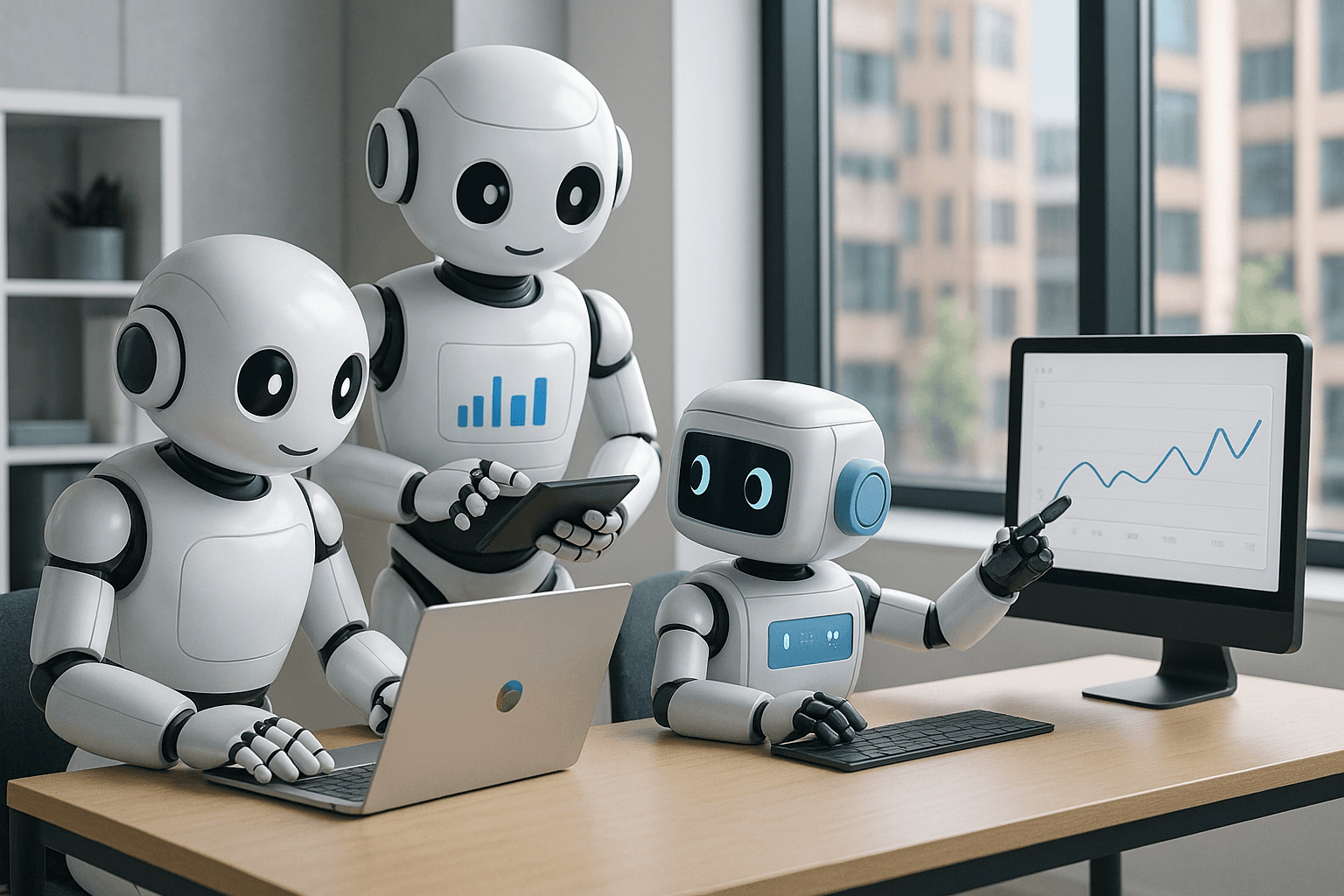
In recent years, the integration of AI agents into workflow automation has transformed how businesses operate. These intelligent systems are not just about performing repetitive tasks. They are becoming sophisticated tools that can make decisions, learn from data, and adapt to new workflows. Whether in customer service, human resources, or manufacturing, AI agents are proving indispensable. Understanding their evolution is key to grasping how they will shape future efficiency and productivity. For a comprehensive overview of this transformation, refer to the Harnessing AI Agents for Workflow Automation: A Comprehensive Guide.
The Impact of Machine Learning on Future Workflow Automation
Machine learning is at the core of AI's ability to evolve. It allows systems to analyze data patterns and make predictions, adapting the workflow based on the latest information. As this technology continues to advance, AI agents will transition from static tools to dynamic systems capable of handling complex tasks with greater autonomy. Businesses that leverage these capabilities can automate more sophisticated workflows, reducing the need for human intervention and minimizing errors. To see real-world applications of these integrations, explore Case Studies: Successful AI Agent Integration in Businesses.
Emerging Trends in AI Workflow Integration
Several trends are emerging that indicate where AI workflow automation is heading:
- Hyper-Automation: This involves using advanced technologies like AI, machine learning, and robotics to automate processes more extensively. The goal is to streamline operations beyond traditional limits.
- Cognitive Automation: AI agents are now able to understand context and take actions based on incomplete data. This ability emulates human cognitive processes, enhancing decision-making within automated workflows.
- Hybrid AI Models: By combining various AI technologies, businesses can create customized solutions tailored to specific workflow needs. For guidance on implementing these AI agents, check the Step-by-Step Guide to Implementing AI Agents in Your Workflow.
The Role of Natural Language Processing in Automation
Natural language processing (NLP) facilitates smoother interactions between humans and AI agents. As NLP technologies evolve, AI agents will better understand and interpret human language, enabling more intuitive command and control of automated workflows. This development will significantly impact customer service, marketing, and content creation, where conversational interfaces can automate routine inquiries and data processing tasks.
Comparing Traditional Automation to AI-Driven Workflow Automation
Feature | Traditional Automation | AI-Driven Workflow Automation |
|---|---|---|
Adaptability | Low - Requires Manual Updates | High - Auto-Adapts via Machine Learning |
Complexity Handling | Limited | Advanced, Handles Complex Tasks |
Human Interaction Requirement | High | Low |
Error Rate | Moderate | Potentially Lower with Learning |
Implementation Speed | Slow | Faster with Pre-Trained Models |
Traditional automation systems often struggle with adaptability and complexity. AI-driven systems, by contrast, are designed to evolve and improve over time, learning from each interaction and reducing the need for human intervention. This makes AI solutions more efficient and versatile in dynamic environments. To determine which AI agents best suit your workflow, see Comparing AI Agents: Which is Right for Your Workflow?.
Ethical Considerations in AI Workflow Automation
As AI becomes more embedded in workflow automation, ethical considerations come to the forefront. These include data privacy, bias in decision-making, and job displacement concerns. It is crucial for businesses to implement ethical guidelines and transparency measures when integrating AI agents. Ensuring fair use and maintaining public trust are pivotal as these technologies become ubiquitous.
Predicting the Next Decade of AI Workflow Technologies
Looking ahead, several innovations are poised to redefine workflow automation:
- Quantum Computing: Potential to revolutionize AI by providing unparalleled computational power.
- Explainable AI (XAI): Offers insights into decision-making processes to foster trust and compliance.
- Edge AI: Allows AI processing closer to the data source, reducing latency and increasing reliability.
These breakthroughs will not only boost the efficiency of AI agents but also expand their applications across industries.
Real-World Applications and Case Studies
AI workflow automation is already yielding tangible results across diverse sectors:
- Healthcare: AI agents streamline patient management and diagnostic processes, improving service delivery and patient satisfaction.
- Finance: Automation of fraud detection and risk assessment tasks enhances accuracy and security.
- Retail: Personalized shopping experiences and inventory management are optimized with AI agents, driving sales and reducing waste.
These examples demonstrate how AI-driven workflow automation is turning theoretical possibilities into practical solutions, offering a glimpse of its full potential.
Future Challenges and Opportunities
While the future of AI workflow automation is bright, challenges remain:
- Scalability: Ensuring systems can handle increasing workloads and complexity.
- Integration: Seamlessly embedding AI agents with existing infrastructures.
- Skill Shortage: Bridging the knowledge gap to manage and develop AI technologies.
Addressing these challenges with innovative solutions and strategic planning will unlock new opportunities for businesses seeking to harness AI for improved operational performance. For further insights into overcoming these challenges, consult Overcoming Challenges in AI-Driven Workflow Automation.
Related Articles
Don't miss what ships next
The daily briefing on AI & tech, straight to your inbox.
Written by
Zach GreeneI write about the tools, trends, and breakthroughs shaping the future of AI, breaking down complex ideas into clear, actionable insights. From emerging startups to the latest in AI tech, I focus on what actually matters and what’s worth paying attention to. My goal is to help you stay ahead in a rapidly evolving space.