OpenAI's GPT-Live: Revolutionizing Real-Time Voice AI
OpenAI's GPT-Live introduces full-duplex voice AI, enabling simultaneous listening and speaking for more natural conversations.
Get the daily AI & tech briefing.
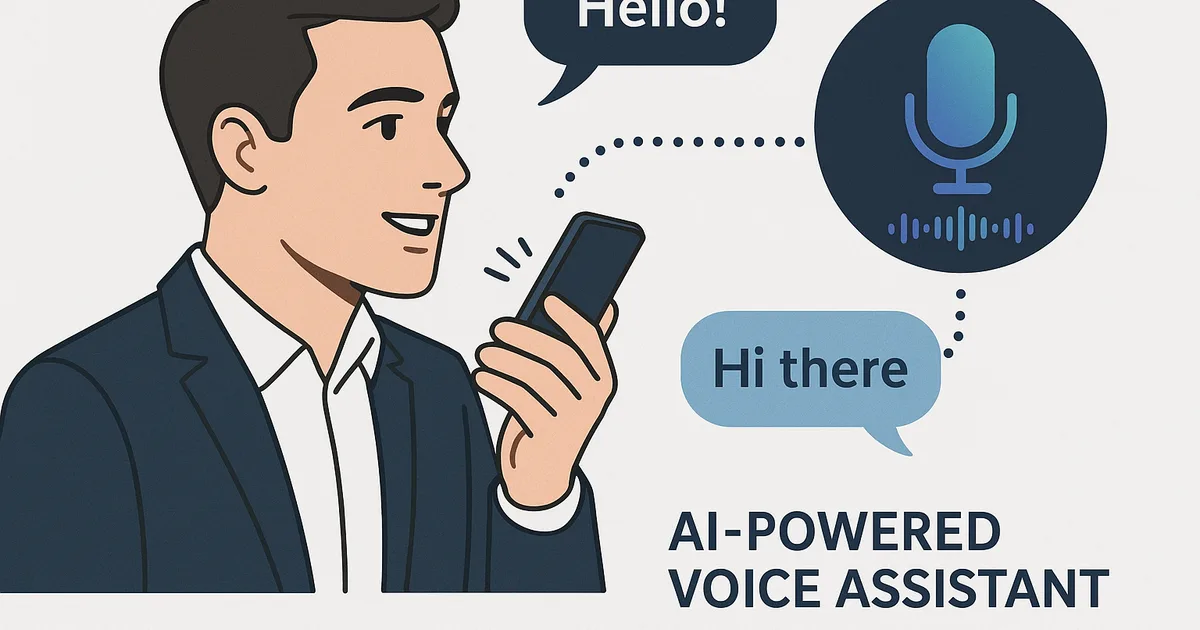
OpenAI has unveiled GPT-Live, a groundbreaking advancement in voice AI technology that allows for full-duplex communication. This means the AI can listen and respond simultaneously, creating a more fluid and natural conversational experience. Unlike traditional voice assistants that operate in a half-duplex manner—waiting for the user to finish speaking before responding—GPT-Live can handle interruptions and overlapping speech, closely mimicking human interactions.
How GPT-Live Enhances Real-Time Conversations
GPT-Live's full-duplex capability allows it to process incoming audio while generating responses simultaneously. This reduces latency and makes interactions feel more immediate and engaging. For instance, during a customer service call, GPT-Live can listen to a customer's query and begin formulating a response without waiting for the customer to finish speaking. This leads to quicker resolutions and a more satisfying user experience.
Technical Innovations Behind GPT-Live
Achieving full-duplex communication required significant advancements in AI processing and audio handling. GPT-Live utilizes advanced neural network architectures capable of parallel processing, allowing it to manage multiple audio streams concurrently. Additionally, sophisticated noise cancellation and speech recognition algorithms ensure that the AI accurately interprets and responds to user input, even in noisy environments.
Potential Applications of GPT-Live
The introduction of GPT-Live opens up numerous possibilities across various industries:
- Customer Service: Businesses can deploy GPT-Live to handle customer inquiries more efficiently, reducing wait times and improving satisfaction.
- Healthcare: Medical professionals can use GPT-Live for real-time transcription and documentation during patient consultations, allowing for more focused patient care.
- Education: Educators can implement GPT-Live in virtual classrooms to provide instant feedback and support to students, enhancing the learning experience.
Comparing GPT-Live to Previous Voice AI Models
To understand the significance of GPT-Live, it's helpful to compare it to earlier voice AI models:
Feature | Traditional Voice AI | GPT-Live |
|---|---|---|
Communication Mode | Half-Duplex | Full-Duplex |
Response Time | Higher Latency | Lower Latency |
Handling Interruptions | Limited | Advanced |
Naturalness of Interaction | Moderate | High |
This comparison highlights GPT-Live's superior performance in creating seamless and natural conversations.
Challenges and Considerations in Implementing GPT-Live
While GPT-Live offers impressive capabilities, there are challenges to consider:
- Data Privacy: Ensuring user data is handled securely is paramount, especially in sensitive applications like healthcare.
- Bias and Fairness: Developers must address potential biases in AI responses to provide fair and unbiased interactions.
- Technical Integration: Integrating GPT-Live into existing systems may require significant technical resources and expertise.
Future Prospects for GPT-Live and Voice AI
The launch of GPT-Live marks a significant milestone in voice AI development. As the technology matures, we can expect further enhancements in natural language understanding and generation, leading to even more human-like interactions. Future developments may also focus on multilingual capabilities, allowing GPT-Live to serve a global user base effectively.
How to Access and Utilize GPT-Live
OpenAI has made GPT-Live available through its API, enabling developers to integrate this advanced voice AI into their applications. Businesses interested in leveraging GPT-Live should consult OpenAI's documentation for implementation guidelines and best practices.
Conclusion
OpenAI's GPT-Live represents a significant leap forward in voice AI technology, offering full-duplex communication that enhances the naturalness and efficiency of human-AI interactions. Its potential applications across various sectors underscore the transformative impact of advanced AI on our daily lives.
FAQ
What is full-duplex communication in AI?
Full-duplex communication allows an AI system to listen and respond simultaneously, enabling more natural and fluid conversations.
How does GPT-Live differ from traditional voice assistants?
Unlike traditional voice assistants that operate in a half-duplex manner, GPT-Live can handle interruptions and overlapping speech, closely mimicking human interactions.
What are some potential applications of GPT-Live?
GPT-Live can be applied in customer service, healthcare, and education to provide more efficient and engaging interactions.
What challenges are associated with implementing GPT-Live?
Challenges include ensuring data privacy, addressing potential biases, and integrating the technology into existing systems.
How can developers access GPT-Live?
Developers can access GPT-Live through OpenAI's API, with detailed implementation guidelines available in the documentation.
Related Articles
Don't miss what ships next
The daily briefing on AI & tech, straight to your inbox.
Written by
Zach GreeneI write about the tools, trends, and breakthroughs shaping the future of AI, breaking down complex ideas into clear, actionable insights. From emerging startups to the latest in AI tech, I focus on what actually matters and what’s worth paying attention to. My goal is to help you stay ahead in a rapidly evolving space.