OpenAI and Broadcom Unveil Jalapeño: A Custom LLM Inference Chip
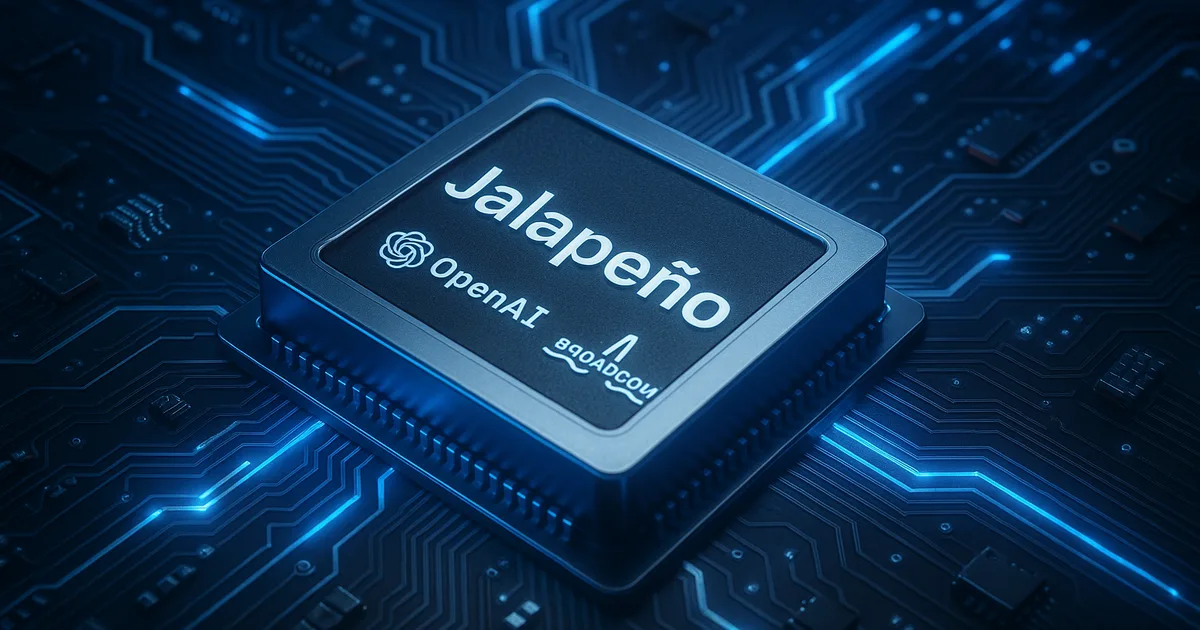
OpenAI and Broadcom have introduced Jalapeño, a custom-designed chip optimized for large language model inference, marking a significant step in AI hardware development.
Get the daily AI & tech briefing.
In a groundbreaking move, OpenAI and Broadcom have jointly announced the development of Jalapeño, a custom-designed chip tailored specifically for large language model (LLM) inference. This collaboration signifies a pivotal shift in AI hardware, aiming to enhance the efficiency and scalability of AI applications.
The Significance of Jalapeño in AI Hardware Development
Jalapeño represents a significant advancement in AI hardware, addressing the growing demand for specialized processors capable of handling the intensive computations required by LLMs. Traditional hardware often falls short in meeting the performance and energy efficiency needs of modern AI applications. By designing a chip specifically for LLM inference, OpenAI and Broadcom aim to bridge this gap, offering a solution that is both powerful and optimized for AI workloads.
Technical Specifications and Performance Enhancements
While detailed specifications of Jalapeño have not been fully disclosed, it is known that the chip has been co-designed by OpenAI and Broadcom to optimize LLM inference tasks. The development process, from initial design to tape-out, was completed in approximately nine months, showcasing the rapid progress in AI hardware innovation. Engineering samples are already running workloads in the lab, including GPT-5.3-Codex-Spark, indicating promising performance enhancements over existing hardware solutions.
Implications for AI Model Deployment and Scalability
The introduction of Jalapeño has profound implications for the deployment and scalability of AI models. By utilizing hardware specifically designed for LLM inference, organizations can expect reduced latency and increased throughput, enabling more efficient processing of complex AI tasks. This advancement is particularly crucial for applications requiring real-time processing and decision-making, such as autonomous systems and interactive AI services.
OpenAI's Strategic Move Towards Vertical Integration
The development of Jalapeño marks OpenAI's strategic move towards vertical integration in the AI industry. By co-designing hardware tailored to their models, OpenAI reduces its dependence on third-party hardware suppliers and gains greater control over the performance and cost of its AI deployments. This approach mirrors trends seen in other tech giants, where in-house hardware development aligns closely with software capabilities to achieve optimized performance.
Broadcom's Role and Contributions to Jalapeño
Broadcom's collaboration with OpenAI in developing Jalapeño highlights its commitment to advancing AI hardware. Leveraging its expertise in semiconductor design and manufacturing, Broadcom has played a crucial role in bringing the Jalapeño chip from concept to reality. This partnership underscores the importance of cross-industry collaboration in driving technological innovation.
Future Prospects and Industry Impact
The unveiling of Jalapeño sets a precedent for future developments in AI hardware. As AI models continue to grow in complexity and size, the need for specialized hardware will become increasingly critical. This development may inspire other organizations to pursue similar collaborations, fostering a competitive environment that accelerates advancements in AI technology.
Challenges and Considerations in Custom AI Hardware
Despite the promising prospects, developing custom AI hardware like Jalapeño presents challenges. These include the substantial investment required for research and development, the need for seamless integration with existing AI frameworks, and the rapid pace of AI model evolution that may outdate hardware designs. Addressing these challenges will be essential for the successful adoption and longevity of custom AI chips.
Conclusion: A Milestone in AI Hardware Evolution
The collaboration between OpenAI and Broadcom to develop Jalapeño marks a significant milestone in the evolution of AI hardware. By creating a chip optimized for LLM inference, they have addressed a critical bottleneck in AI processing, paving the way for more efficient and scalable AI applications. This development not only enhances OpenAI's capabilities but also sets a benchmark for the industry, highlighting the importance of hardware-software co-design in achieving optimal AI performance.
FAQ
What is Jalapeño, and who developed it?
Jalapeño is a custom-designed chip optimized for large language model inference, developed collaboratively by OpenAI and Broadcom.
How does Jalapeño improve AI model performance?
By being specifically tailored for LLM inference tasks, Jalapeño enhances processing efficiency, reduces latency, and increases throughput, leading to more efficient AI model performance.
What are the implications of OpenAI's vertical integration strategy?
OpenAI's move towards vertical integration, exemplified by developing Jalapeño, reduces reliance on third-party hardware, allowing for greater control over performance and cost, and aligns hardware development closely with software capabilities.
What role did Broadcom play in the development of Jalapeño?
Broadcom contributed its semiconductor design and manufacturing expertise, collaborating with OpenAI to bring the Jalapeño chip from concept to reality.
What challenges are associated with developing custom AI hardware like Jalapeño?
Challenges include significant R&D investment, ensuring seamless integration with existing AI frameworks, and keeping pace with the rapid evolution of AI models that may outdate hardware designs.
Related Articles



Don't miss what ships next
The daily briefing on AI & tech, straight to your inbox.
Written by
Zach GreeneI write about the tools, trends, and breakthroughs shaping the future of AI, breaking down complex ideas into clear, actionable insights. From emerging startups to the latest in AI tech, I focus on what actually matters and what’s worth paying attention to. My goal is to help you stay ahead in a rapidly evolving space.