Meta's Iris AI Chip: A Game-Changer in AI Computing
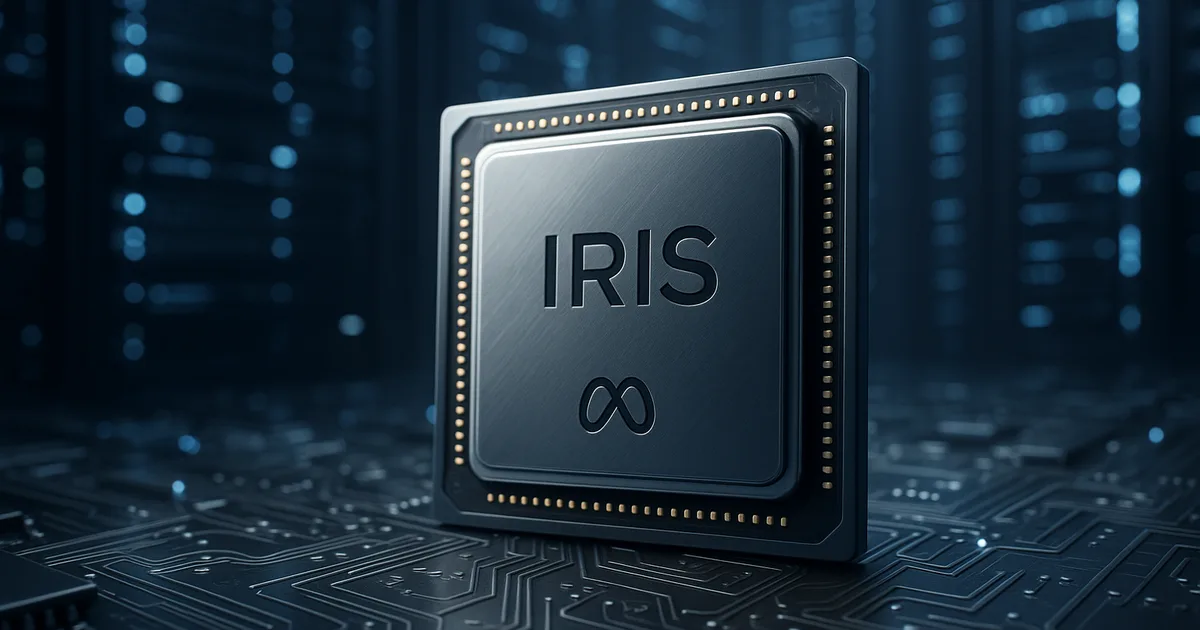
Meta's upcoming Iris AI chip aims to double the company's computing capacity, marking a significant shift in AI hardware development.
Get the daily AI & tech briefing.
Meta Platforms is set to revolutionize its AI infrastructure with the introduction of its in-house designed AI chip, code-named 'Iris.' Scheduled for production in September 2026, this move signifies Meta's commitment to enhancing its AI capabilities and reducing reliance on external hardware suppliers.
Meta's Strategic Shift to In-House AI Hardware
In a bid to gain greater control over its AI infrastructure, Meta has embarked on developing custom AI chips tailored to its specific needs. The 'Iris' chip is part of a broader initiative known as Meta Training and Inference Accelerators (MTIA), which aims to optimize the performance of AI models powering platforms like Facebook and Instagram. By designing hardware in-house, Meta seeks to achieve better integration between its software and hardware components, leading to improved efficiency and performance. (m.investing.com)
The 'Iris' Chip: Technical Specifications and Capabilities
While detailed technical specifications of the 'Iris' chip remain under wraps, it's known that the chip has undergone rigorous testing over a six-week period, revealing no major issues. This rapid development cycle underscores Meta's agility in hardware innovation. The 'Iris' chip is expected to enhance the processing of complex AI tasks, such as image and speech recognition, by providing higher computational power and energy efficiency compared to off-the-shelf solutions. (m.investing.com)
Implications for Meta's AI Infrastructure
The introduction of the 'Iris' chip is projected to double Meta's computing capacity to 14 gigawatts by next year. This substantial increase will enable the company to handle more sophisticated AI models and a higher volume of data, thereby improving the user experience across its platforms. Additionally, owning the hardware design allows Meta to implement security features tailored to its ecosystem, potentially reducing vulnerabilities associated with third-party components. (m.investing.com)
Meta's Position in the AI Hardware Landscape
By developing the 'Iris' chip, Meta joins a select group of tech giants investing in custom AI hardware. Companies like Google and Apple have already made significant strides in this area with their Tensor Processing Units (TPUs) and Neural Engine chips, respectively. Meta's entry into this space not only showcases its commitment to AI advancement but also positions it as a formidable competitor in the AI hardware market. (m.investing.com)
Potential Challenges and Considerations
Despite the promising outlook, Meta's venture into custom AI hardware is not without challenges. Developing and manufacturing chips require substantial investment and expertise. Ensuring compatibility with existing infrastructure and software ecosystems is crucial to avoid disruptions. Moreover, as AI models continue to evolve rapidly, the hardware must be adaptable to accommodate future advancements without necessitating frequent overhauls.
Broader Impact on the Tech Industry
Meta's move may inspire other tech companies to explore in-house hardware development, potentially leading to a shift in how AI infrastructure is approached industry-wide. This trend could foster innovation, as companies tailor hardware to their unique requirements, but it might also lead to fragmentation if interoperability between different systems is not maintained.
Future Prospects for Meta's AI Initiatives
Looking ahead, the success of the 'Iris' chip could pave the way for further hardware innovations within Meta. The company may expand its MTIA project to develop a range of chips optimized for various AI tasks, from data center operations to edge computing. Such developments would not only bolster Meta's AI capabilities but also potentially offer new products and services to external clients, diversifying its revenue streams.
FAQ
What is Meta's 'Iris' AI chip?
The 'Iris' AI chip is Meta's custom-designed hardware aimed at enhancing the company's AI processing capabilities. It's part of the Meta Training and Inference Accelerators (MTIA) initiative and is scheduled for production in September 2026. (m.investing.com)
Why is Meta developing its own AI chips?
By developing in-house AI chips, Meta aims to optimize hardware performance for its specific AI workloads, reduce dependency on external suppliers, and achieve better integration between its software and hardware components.
How will the 'Iris' chip impact Meta's computing capacity?
The 'Iris' chip is expected to double Meta's computing capacity to 14 gigawatts by next year, enabling the company to handle more complex AI models and larger data volumes. (m.investing.com)
What challenges might Meta face with the 'Iris' chip?
Challenges include the substantial investment required for chip development, ensuring compatibility with existing infrastructure, and the need for adaptability to keep pace with rapidly evolving AI models.
How does Meta's 'Iris' chip compare to other tech companies' AI hardware?
Similar to Google's TPUs and Apple's Neural Engine, Meta's 'Iris' chip represents a strategic move to develop custom hardware tailored to its AI needs, positioning the company as a significant player in the AI hardware market.
Related Articles


Don't miss what ships next
The daily briefing on AI & tech, straight to your inbox.
Written by
Zach GreeneI write about the tools, trends, and breakthroughs shaping the future of AI, breaking down complex ideas into clear, actionable insights. From emerging startups to the latest in AI tech, I focus on what actually matters and what’s worth paying attention to. My goal is to help you stay ahead in a rapidly evolving space.