Harnessing Multimodal AI: Integrate Text, Image, and Audio Models
Explore how integrating multimodal AI - merging text, image, and audio models - enhances workflows for productivity and innovation. Learn strategies and best practices.

Get the daily AI & tech briefing.
Understanding Multimodal AI Integration: What It Means and Why It Matters
Multimodal AI is transforming how we approach information processing by integrating text, image, and audio models into cohesive workflows. This integration allows machines to interpret and generate information more like humans do, offering a more holistic view of data. But what exactly is multimodal AI integration, and why should you care?
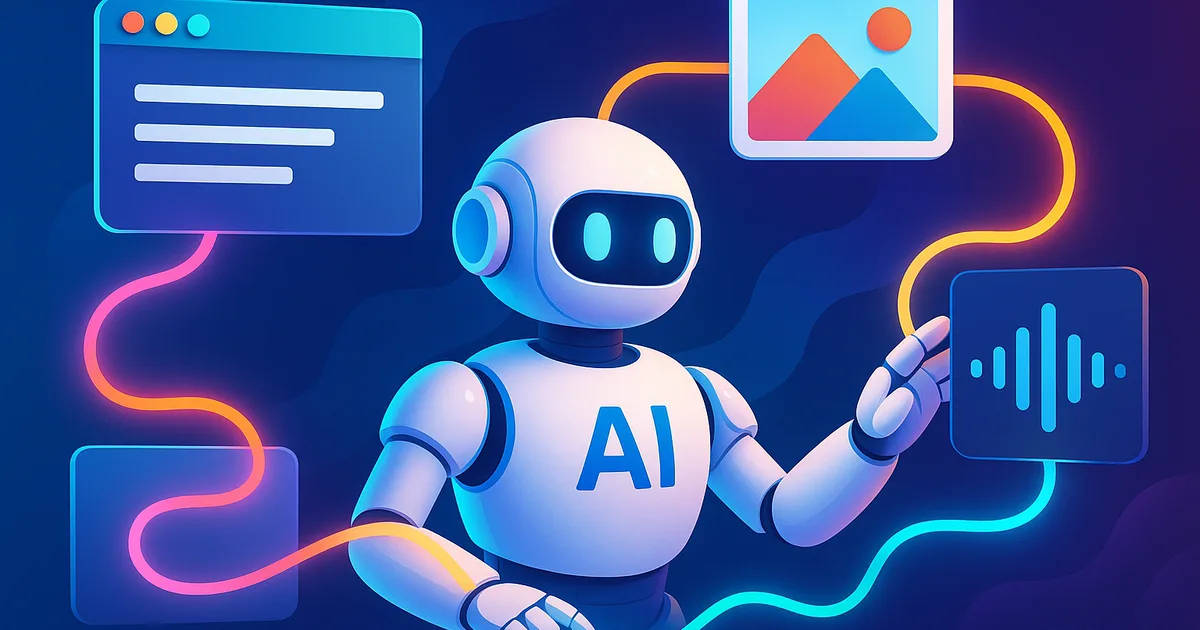
In essence, multimodal AI refers to systems that can process and merge multiple types of input and output modalities. Imagine a system that understands a sentence, recognizes an image, and comprehends an audio clip all at once. This capability enhances decision-making, enables more natural human-computer interactions, and drives innovation in various sectors.
The value lies in its ability to mimic human sensory inputs. Imagine an AI that can not only read a report but also analyze a relevant image and listen to associated audio data - all simultaneously. This fusion leads to superior pattern recognition, context understanding, and decision-making capabilities that were previously unimaginable.
Integrating these models into your workflow can skyrocket productivity. By automating mundane tasks and providing deeper insights, organizations can focus on strategic initiatives, drive innovation, and improve efficiency across all operations. For guidance on how to implement multimodal AI effectively, a step-by-step guide can be invaluable.
Exploring the Components: Text, Image, and Audio Models
Each component of multimodal AI - text, image, and audio models - brings something unique to the table. Understanding their specific functions helps us appreciate how they work together.
Text Models: These models are designed to process and generate human language. Natural Language Processing (NLP) is a key area here, with applications ranging from chatbots to language translation, sentiment analysis, and more. Text models can glean insights from vast amounts of written content, making them invaluable for data-driven decision-making.
Image Models: Image-based AI systems analyze visual data to recognize patterns, objects, and scenes. Computer vision, a field within AI, applies to everything from facial recognition to autonomous vehicles and medical imaging. Image models help automate tasks such as quality control in manufacturing, enhancing productivity in previously labor-intensive operations.
Audio Models: These models deal with sound data, including speech and environmental noises. They enable voice recognition, music generation, and even emotional analysis from speech patterns. Audio models are particularly valuable in sectors like customer service, where they power voice assistants and improve user experiences through natural interactions.
Each type of model complements the others by providing a different slice of the sensory pie. When fully integrated, they create robust systems capable of sophisticated tasks that resemble human reasoning.
The Role of AI Workflows in Modern Business
AI workflows are the structured processes that utilize AI models to automate tasks, analyze data, and generate insights. They are pivotal in transforming raw data into actionable intelligence that supports business objectives.
These workflows are crucial for several reasons:
- Automation: AI workflows streamline operations by automating repetitive tasks. Whether it's sorting data, generating reports, or responding to routine customer service inquiries, AI manages these tasks more efficiently than humans.
- Data Analysis: AI can process vast datasets far quicker than humans. By integrating multimodal AI, businesses can analyze text, image, and audio data in one sweep, gaining comprehensive insights.
- Scalability: AI workflows can easily scale as businesses grow or data increases. They provide the flexibility to handle more complex tasks without needing additional resources.
- Innovation: By freeing up human workers from mundane tasks, AI workflows foster innovation. Teams can allocate more energy towards creative problem-solving and strategic decision-making.
Incorporating AI into your workflows isn’t just about adding another tool to the box; it’s about redefining how work gets done in your organization.
Selecting the Right Multimodal AI Models for Your Needs
Many companies face the challenge of selecting the right AI models that fit their specific needs and goals. Careful consideration is required to ensure a fruitful investment and real-world benefits. For more detailed guidance, see our recommendations on selecting the right multimodal AI models for your needs.
First, assess your organization's specific requirements. What issues are you trying to solve? Are you looking to automate customer support, enhance data analysis, or improve product quality through image recognition? Clearly defining your objectives will streamline the model selection process.
Next, research the available models. Open-source options like BERT for text processing or YOLO for image recognition have robust communities and comprehensive documentation. Meanwhile, proprietary models often offer advanced features and dedicated support.
Consider the scalability of the models. While some may serve current needs, others can adapt as your operations grow. Make sure the chosen models can handle increased workloads without compromising performance.
Don’t overlook integration capabilities. Choose models that easily fit into your existing tech stack. The fewer adjustments needed, the quicker and more cost-effective the implementation process.
Implementing Multimodal AI: A Step-by-Step Guide
Successfully integrating multimodal AI into existing workflows requires careful planning and execution. Here’s a structured approach to guide you through this complex process.
Step 1: Define Your Objectives Begin by clearly outlining what you hope to achieve. Are you aiming for better customer interactions, improved data insights, or efficient resource management? This clarity will guide every other step.
Step 2: Analyze Existing Workflows Evaluate your current processes to identify areas ripe for AI integration. Look for repetitive tasks, data processing bottlenecks, or situations where AI can assist with decision making. This analysis helps pinpoint where multimodal AI will have the most impact.
Step 3: Choose Compatible Tools and Models Select AI tools and models that align with your objectives and are compatible with your tech infrastructure. Whether you opt for ready-to-use platforms or custom solutions, ensure they support the required modalities and integrate smoothly into your systems.
Step 4: Pilot Testing Before a full-scale implementation, conduct pilot tests. Implement the models in a controlled environment and monitor their performance. This phase helps in identifying issues and understanding model behavior without risking business operations.
Step 5: Full Deployment and Monitoring With successful pilot outcomes, proceed to full deployment. However, implementation doesn’t end here. Continually monitor model performance, user interactions, and outputs. Use this data for ongoing optimization and refinement.
Optimizing Multimodal AI Models for Maximum Efficiency
Once your multimodal AI models are up and running, optimization ensures they perform at their best. This involves tweaking model parameters, updating algorithms, and refining processes to maximize outputs. To delve deeper into strategies for optimization, consider our insights on optimizing multimodal AI models for maximum efficiency.
Regular Updates: Keep AI models updated with the latest technological advancements and patches. Vendors frequently release updates that enhance performance or add functionalities.
Parameter Tuning: Adjust the model’s parameters to better suit your particular dataset and objectives. This may involve fine-tuning neural network layers, learning rates, and thresholds to achieve more accurate results.
Data Quality Assurance: Ensure the data fed into your models is clean and relevant. Bad data can skew results and reduce efficiency. Regularly audit your data sources for discrepancies and irrelevancies.
Feedback Mechanism: Implement a feedback loop where outputs are evaluated and insights are fed back into the system for continuous improvement. This cycle is crucial for maintaining efficiency and adapting to new challenges or data scenarios.
Case Studies: Successful Multimodal AI Integration
Examining real-world implementations can offer deeper insights into the benefits and challenges of multimodal AI integration. Here are a few notable examples:
Company A: Enhancing Customer Support with Text and Audio AI A leading telecom company integrated text and audio models to revolutionize its customer support system. AI-powered chatbots initially handle queries, with seamless transitions to human agents if needed. This approach reduced wait times and improved customer satisfaction significantly.
Company B: Transforming Manufacturing with Image Models A manufacturing giant used image recognition AI to boost quality control in its assembly lines. By detecting defects early, the company reduced waste and improved product standards. This move saved millions in potential recall costs.
Company C: Retail Innovation Through Multimodal AI A major retailer combined text, image, and audio models to personalize in-store experiences. Customers received tailored product recommendations and assistance via AI kiosks, increasing engagement and sales.
These cases underscore the transformative potential of multimodal AI when applied thoughtfully and strategically. For more comprehensive examples, explore our case studies on successful multimodal AI integration.
Challenges and Solutions in Multimodal AI Integration
While multimodal AI offers substantial benefits, integrating it into workflows is not devoid of challenges. Understanding these hurdles and their solutions is crucial for targeted and effective implementation.
Integration Complexity: Combining different modalities and ensuring seamless interaction between models can be complex. The solution lies in thorough testing and phased rollouts to ensure all components work harmoniously.
Data Privacy and Security: With AI handling sensitive data, privacy concerns are paramount. Implement robust security measures, including encryption and access controls, to protect data integrity.
Resource Allocation: AI projects often demand significant resources. Allocating sufficient budget, infrastructure, and skilled personnel is key. Consider cloud-based solutions to reduce infrastructure costs and leverage existing expertise.
Resistance to Change: Adapting to AI-driven workflows requires cultural shifts within an organization. Address this with clear communication, training programs, and by demonstrating AI’s value to stakeholders at all levels.
For more insights on tackling these issues, refer to our detailed discussion on challenges and solutions in multimodal AI integration.
Future Trends in Multimodal AI and Workflow Integration
As technology advances, the role of multimodal AI in workflows continues to evolve. Here are some trends to watch:
- Increased Personalization: Future AI systems will offer more personalized interactions by better understanding individual preferences and behaviors through combined data inputs.
- Real-Time Processing: Enhanced hardware and algorithms will enable more real-time processing, making AI workflows more instantaneous and responsive, particularly important for sectors like healthcare and finance.
- Hybrid Models: Expect the development of hybrid models that seamlessly blend multimodal AI capabilities into single entities, offering comprehensive solutions that are easier to deploy and maintain.
- Ethical AI Practises: The rise of ethical AI will guide developments, ensuring AI systems are transparent and fair, with increased scrutiny on how data is used and decisions are made.
- Adoption in New Sectors: As AI becomes more accessible, sectors like education and agriculture will adopt these technologies more widely, unlocking new productivity and innovation levels.
Keeping an eye on these trends will help organizations stay ahead of the curve, adapting to new opportunities and challenges efficiently. For a broader perspective, consider exploring future trends in multimodal AI and workflow integration.
Building a Multimodal AI Strategy: Key Considerations
Developing a robust AI strategy involves understanding your goals, resources, and market trends. Here are essential considerations for creating a strategy that aligns with your vision.
Vision Alignment: Ensure your AI strategy aligns with broader organizational goals. Every AI initiative should support and enhance your overarching mission and objectives.
Stakeholder Buy-In: Garner support from all relevant stakeholders. Effective AI strategies often require cross-departmental efforts. Engage leadership, technical teams, and end-users early in the planning stages.
Adaptability: Design your strategy with flexibility in mind. The technological landscape is continually evolving. Being open to refinements can help your strategy stay relevant and effective.
Proof of Concept (PoC): Conduct PoCs to validate assumptions and demonstrate the potential value of AI before large-scale investments. These trials can offer insights into the practicality and benefits of AI approaches without significant commitments.
Navigating Legal and Ethical Considerations in Multimodal AI
Integrating AI technologies involves navigating a complex web of legal and ethical considerations. From data privacy to AI ethics, there are key areas all organizations must address.
Data Protection Laws: Compliance with regulations like GDPR or CCPA is non-negotiable. Ensure your multimodal AI systems adhere to these standards by incorporating privacy-by-design principles and maintaining transparency on data usage.
Bias and Fairness: AI models can inadvertently perpetuate biases present in training data. To mitigate this, implement fairness audits and ensure diverse training data sets, alongside ongoing model assessment to catch and rectify biases.
Transparent AI Usage: Clearly communicate how AI is used in user-facing applications. Transparency builds trust and encourages user acceptance, critical for customer-facing solutions.
Intellectual Property (IP): Understand the IP implications of using third-party AI models or developing in-house solutions. Ensure all applied solutions respect licensing agreements and IP rights.
Enhancing Team Collaboration with AI Tools
AI is not solely about replacing human tasks. When integrated thoughtfully, AI tools can greatly enhance team collaboration, leading to more innovative and effective workflows.
Automating Mundane Tasks: AI can handle routine operations, freeing teams to focus on creative and strategic initiatives. Automation of data entry, report generation, and scheduling allows teams to use their time more productively.
Enabling Real-Time Collaboration: AI-powered tools facilitate better collaborations. Features like real-time document editing, speech-to-text meeting transcription, and AI-powered scheduling assist in smoother team dynamics.
Cross-Disciplinary Communication: AI’s analysis capabilities can break down silos between departments by creating clearer insights from combined datasets. Teams can then work more cohesively towards common goals.
Fostering Innovation: By assuming repetitive work, AI liberates team members to engage in creative problem-solving. This increased focus on innovative tasks can lead to breakthroughs and new value generation.
Common Pitfalls in Multimodal AI Integration and How to Avoid Them
Successfully integrating multimodal AI isn’t without challenges. Here are common pitfalls and strategies to avoid them:
Overestimating Capabilities: Multimodal AI is powerful but not omnipotent. Avoid unrealistic expectations by understanding the technology’s real capabilities and limitations.
Poor Data Management: AI models are only as good as the data they process. Implement rigorous data management practices to ensure quality inputs and accurate outputs.
Lacking Strategic Focus: Without a clear vision and objectives, AI integration can falter. Articulate specific goals and curating metrics to track progress can keep efforts aligned and productive.
Underestimating Change Management: Introducing AI can significantly impact existing workflows. Prepare your team for changes with training programs and encouraging an open culture for questions and adaptations.
Leveraging Cloud Solutions for Multimodal AI Integration
The emergence of cloud computing has significantly influenced the deployment and scalability of AI technologies. Leveraging these solutions can enhance your AI integration efforts.
Scalability: Cloud platforms offer scalable resources that can adjust according to demand. This flexibility is cost-efficient, especially for companies starting their AI journey.
Reduced Infrastructure Costs: Eliminating the need for costly hardware investments, cloud solutions reduce upfront costs, allowing organizations to focus on software and developing AI capabilities.
Ease of Integration: Many cloud solutions offer pre-built AI models and APIs that simplify integration into existing workflows, reducing the technical burden on in-house teams.
Global Collaboration: Cloud technologies enable seamless global access, allowing teams across regions to collaborate using the same AI tools without latency issues.
Evaluation and Continuous Learning in AI Systems
Keeping your AI models effective requires ongoing evaluation and learning from their performance and outputs. This continuous improvement loop is crucial for sustained success.
Performance Metrics: Establish clear metrics to evaluate your AI’s performance. This could include accuracy, processing time, user satisfaction, or any other parameters relevant to your objectives.
Regular Audits: Schedule regular audits to assess model effectiveness. These assessments help pinpoint areas need improvement and ensure alignment with business goals.
Learning Systems: Implement mechanisms that allow AI to learn from new data. Adaptive learning models can adjust to novel scenarios, keeping outputs relevant and accurate.
Cross-Departmental Insights: Solicit observations from different departments using AI solutions. Fresh perspectives can highlight issues or opportunities overlooked by the primary implementation team.
Advanced Techniques in Multimodal AI Integration
As organizations delve deeper into multimodal AI, advanced techniques become crucial to refining these integrations. Utilizing techniques like attention mechanisms and transformer models can enhance the synergy between text, image, and audio data. Attention mechanisms allow models to focus on important aspects of each data type, providing more accurate and context-aware outputs. By integrating advanced transformers, businesses can achieve cross-modal embeddings, where data from different modalities is projected into a shared space, facilitating seamless interaction and understanding.
Another effective technique is the use of generative models for data augmentation. These models can generate synthetic data that mirrors the real-world conditions, bolstering the training datasets and improving model robustness. For instance, variational autoencoders can be used to create diverse image captions or soundscapes that enrich training data without additional manual input.
Moreover, leveraging ensemble methods can significantly enhance model performance. By combining multiple models that specialize in different modalities, organizations can benefit from the strengths of each model type. This approach reduces overfitting and increases accuracy by balancing the weaknesses present in individual models, providing a more resilient AI integration.
Tooling and Cost Considerations for Multimodal AI
When integrating multimodal AI models, it's essential to understand the tooling landscape and associated costs. There are a plethora of tools available, ranging from open-source libraries like TensorFlow and PyTorch to proprietary platforms like Google Cloud's AutoML and AWS's SageMaker. Each platform offers unique features and capabilities, so selecting the right tools depends on specific needs, in-house expertise, and budget constraints.
Cost considerations shouldn't just focus on the initial setup. The long-term expenses of maintaining and scaling these systems are crucial. This includes costs related to cloud computing resources, data storage, and ongoing model training. Subscription-based platforms might offer flexibility and lower upfront costs, while pay-as-you-go services allow for scaling without massive investments.
Moreover, investing in the right human resources is vital. Skilled personnel are needed to manage and optimize these tools effectively. The cost of training or hiring experts can add up, but the investment pays off in smoother integrations and more efficient system management. Choose wisely to ensure that both the tools and the team align with your AI strategy.
Metrics and Measuring Success in Multimodal AI
Determining the success of multimodal AI integration involves setting clear metrics and continuously monitoring them. It's not only about technical accuracy but also how effectively these models achieve business objectives. Establishing key performance indicators (KPIs) that align with your goals will help track progress effectively. Common metrics include precision, recall, and F1 score, which provide insights into model performance.
For more practical application, consider metrics like time to deployment, user satisfaction, and ROI. Evaluating the speed at which AI models can be deployed into production helps assess workflow efficiency. User satisfaction can be gauged through feedback and usage analytics, revealing how beneficial the integration is in real-world scenarios. Return on investment is a critical metric that evaluates the financial impact of AI integration against the upfront and ongoing costs.
Regular audits and reviews should be performed to ensure that models are functioning as expected. Encourage a culture of continuous learning and adaptation within your team to help refine AI tools over time. As limitations or changes arise, adapt KPIs to reflect new objectives and market conditions, ensuring your measurement of success remains relevant and accurate.
Related Articles



Don't miss what ships next
The daily briefing on AI & tech, straight to your inbox.
Written by
Vunsh MehtaI’m a computer science student and developer focused on AI, automation, and emerging tech. I write about AI news, tools, and trends from a practical, builder-focused perspective.