Google Gemini Is Now in 250 Million Cars - Here Is What That Actually Means for You
Google Gemini's integration into 250 million vehicles is reshaping the driving experience with AI-powered enhancements.

Get the daily AI & tech briefing.
Google Gemini's Integration into Modern Vehicles Expands AI's Role in Daily Life
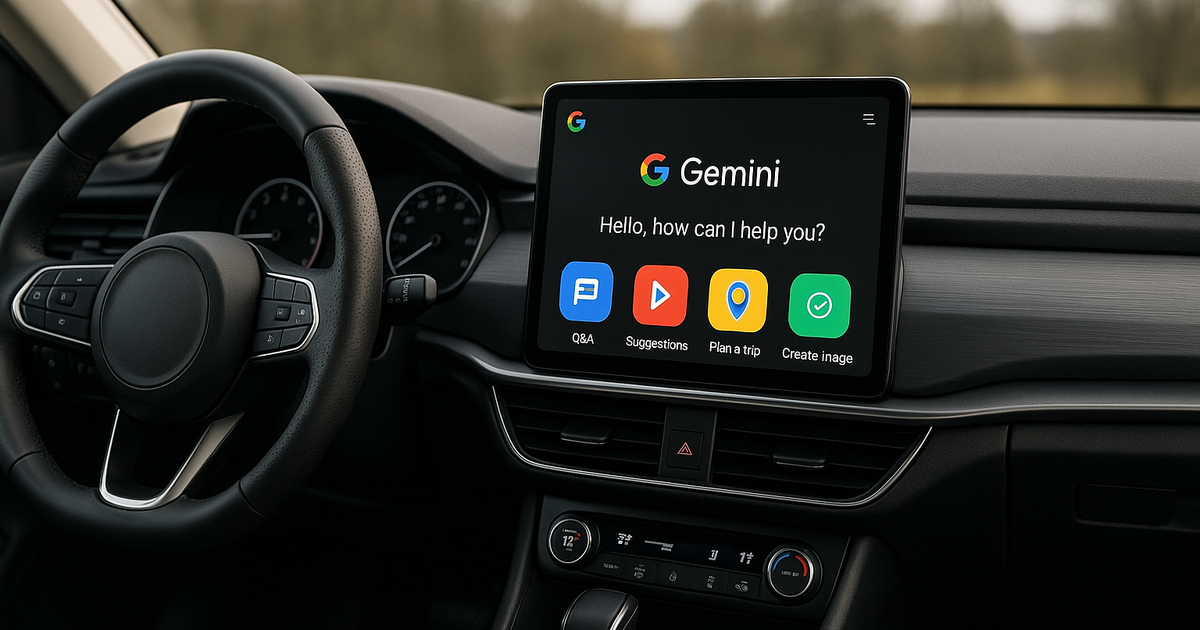
Google's Gemini initiative recently reached a milestone by being integrated into 250 million vehicles worldwide. This development marks a significant shift in how artificial intelligence is woven into everyday experiences. With this integration, drivers can expect a more technologically connected experience on the road. Google's objective is to seamlessly enhance vehicle functionalities with its robust AI systems. By equipping vehicles with enhanced navigation, safety, and convenience features, drivers and passengers alike benefit from a dynamic interaction with their cars.
The Impact of AI on Driving Safety and Navigation
AI integration in vehicles primarily enhances safety and navigation. Gemini aids in predictive route suggestions based on traffic patterns and offers real-time traffic updates, minimizing travel time. The AI's machine learning capabilities ensure that directions are continuously optimized for efficiency and safety. Furthermore, Gemini contributes to accident prevention by integrating with advanced driver-assistance systems (ADAS). These systems include lane-keeping assistance, adaptive cruise control, and automatic emergency braking - all powered by AI that learns and adapts with every trip.
Enhancing Driver Experience Through Personalized Controls
Personalization is at the forefront of Gemini's capabilities in vehicles. The system learns from user habits and preferences to create a tailored driving experience. Imagine your car automatically adjusting settings based on who is driving - from seating and mirror positions to preferred radio stations and climate settings. Google Gemini uses data from previous interactions to streamline these adjustments. This personalization makes each trip uniquely comfortable and catered to individual needs, enhancing user satisfaction and fostering more seamless human-machine interaction.
Privacy Concerns with AI Integration in Cars
While AI integration brings numerous benefits, it also raises concerns about data privacy. Vehicles equipped with AI collect vast amounts of data to function optimally. Google ensures that this data is anonymized and encrypted, adhering to stringent privacy standards. They aim to reassure users that personal information is protected and only used to improve car functionalities. Transparency in how data is managed is critical, and Google has been proactive in maintaining customer trust through public policy statements and continuous security upgrades.
Bridging Connectivity and Efficiency in Daily Commutes
Google Gemini fosters connectivity beyond navigation. It integrates with smart devices in your ecosystem, allowing seamless control over your smart home right from your car. This functionality enables drivers to adjust home thermostats, lighting, or even start coffee brewing before arriving home. Furthermore, Gemini enhances efficiency by managing schedules en route, reading emails, or setting reminders, ensuring drivers can maximize productivity during their commutes.
The Road Ahead: Future Prospects for AI in Vehicles
The future prospects for AI-powered vehicles are vast, with Google Gemini leading innovation. Anticipated developments include greater autonomous driving capabilities fueled by Gemini's learning algorithms. As these systems become more adept at interpreting vast datasets, fully autonomous vehicles could soon transition from a futuristic concept to everyday reality. Such advancements promise to revolutionize urban planning, reduce traffic congestion, and potentially lower the rate of vehicular accidents.
Comparing Google Gemini to Other AI Automotive Systems
In the race to integrate AI into vehicles, Google Gemini is competing with systems like Tesla's Autopilot and Apple's CarPlay. Unlike its competitors, Gemini incorporates a wider ecosystem connectivity, given Google's dominance in various tech sectors. Here's a comparative glance:
Feature | Google Gemini | Tesla Autopilot | Apple CarPlay |
|---|---|---|---|
Real-time Navigation | ✔️ | ✔️ | ✔️ |
Advanced Driver Assistance | ✔️ | ✔️ | ❌ |
Smart Home Integration | ✔️ | ❌ | ✔️ |
Personalization | ✔️ | ✔️ | ✔️ |
Data Privacy Measures | ✔️ | ✔️ | ✔️ |
Gemini's ability to communicate across different devices and platforms makes it a robust choice for users seeking comprehensive connectivity and personalized interaction.
FAQs
How does Google Gemini improve vehicle navigation?
Google Gemini enhances navigation through real-time traffic data, predictive route suggestions, and integration with your personalized preferences. Its machine learning capabilities ensure efficient routes and minimize travel time.
Is my data safe with Google's AI integration in cars?
Yes, Google encrypts and anonymizes data collected from AI systems. They follow strict privacy standards, ensuring your personal information remains protected while optimizing functionalities.
Can Google Gemini connect to other smart devices?
Absolutely. One of Gemini's strengths is its ability to connect seamlessly with a variety of smart devices, allowing you to control aspects of your smart home from your car.
What makes Google Gemini different from Tesla Autopilot?
While both offer advanced driving assistance, Gemini excels in ecosystem connectivity, allowing broader integration with smart home devices and personalized user experiences across platforms.
Will AI in cars lead to autonomous driving?
Yes, the integration of AI like Google Gemini is paving the way for autonomous driving. As systems advance, they provide the foundational technology necessary for the future of self-driving vehicles.
Related Articles
Don't miss what ships next
The daily briefing on AI & tech, straight to your inbox.
Written by
Vunsh MehtaI’m a computer science student and developer focused on AI, automation, and emerging tech. I write about AI news, tools, and trends from a practical, builder-focused perspective.