AI-Powered Humanoid Robots Perform Live Surgeries: A Medical Milestone
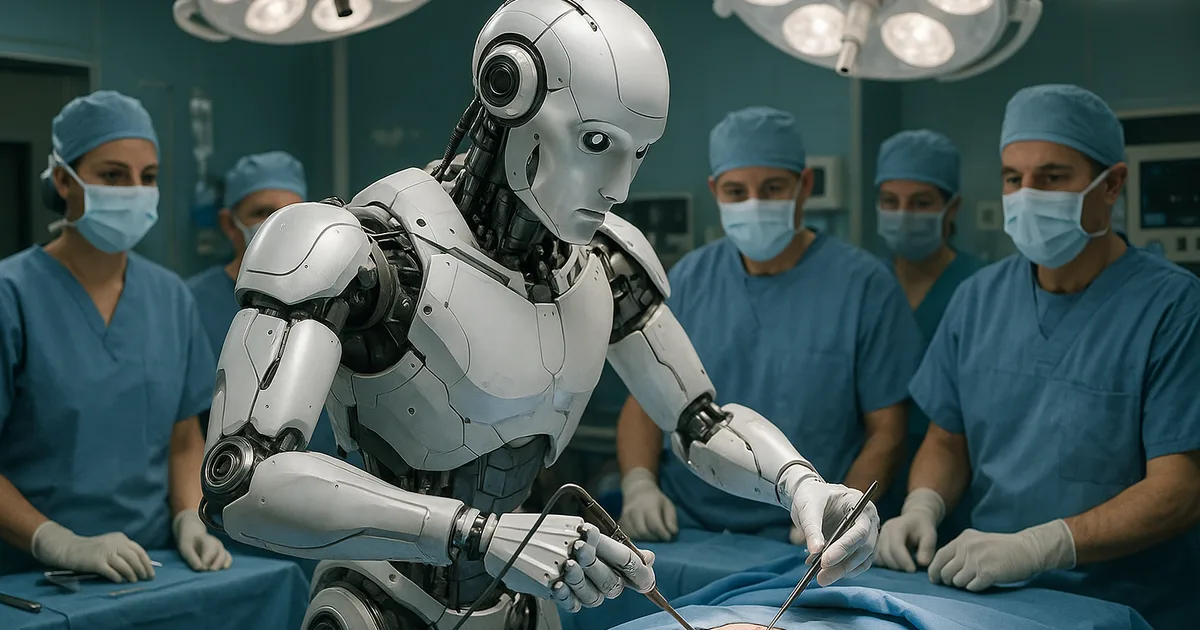
Humanoid robots equipped with AI have successfully performed live surgeries, marking a significant advancement in medical technology.
Get the daily AI & tech briefing.
AI-Powered Humanoid Robots Successfully Perform Live Surgeries
In a groundbreaking development, humanoid robots powered by artificial intelligence have successfully performed live surgical procedures. This achievement marks a significant milestone in the integration of AI and robotics into the medical field, promising enhanced precision and efficiency in surgical operations.
The Evolution of AI in Surgical Procedures
The incorporation of AI into surgery has been evolving over the past few decades. Initially, robotic systems like the da Vinci Surgical System provided surgeons with enhanced dexterity and control. However, these systems required direct human operation. The recent success of fully autonomous humanoid robots performing live surgeries represents a leap forward, showcasing the potential for AI to take on more complex and independent roles in medical procedures.
Technical Capabilities of Humanoid Surgical Robots
These advanced humanoid robots are equipped with state-of-the-art AI algorithms that enable them to analyze patient data, plan surgical procedures, and execute them with remarkable precision. They utilize machine learning models trained on vast datasets of surgical operations, allowing them to adapt to various scenarios and make real-time decisions during surgery. Additionally, their humanoid design facilitates interaction with human medical staff and patients, ensuring seamless integration into existing healthcare environments.
Implications for Surgical Precision and Patient Outcomes
The deployment of AI-powered humanoid robots in surgery has the potential to significantly enhance surgical precision, reducing the risk of human error. Their ability to perform repetitive tasks with consistent accuracy can lead to improved patient outcomes, shorter recovery times, and reduced postoperative complications. Moreover, these robots can operate in environments that may be hazardous for human surgeons, such as during infectious disease outbreaks or in areas with limited medical resources.
Ethical Considerations and Regulatory Challenges
The introduction of autonomous surgical robots raises important ethical and regulatory questions. Ensuring patient safety and maintaining trust in medical procedures are paramount. Regulatory bodies will need to establish comprehensive guidelines and standards for the deployment of such technology. Additionally, addressing concerns about job displacement among medical professionals and ensuring that these robots are used to complement rather than replace human expertise will be crucial.
Future Prospects and Research Directions
Looking ahead, the success of AI-powered humanoid robots in live surgeries opens new avenues for research and development. Future efforts may focus on enhancing the adaptability of these robots to a wider range of surgical procedures, improving their decision-making capabilities, and integrating them with other emerging technologies such as augmented reality for enhanced visualization during surgery. Collaborative research between technologists and medical professionals will be essential to realize the full potential of this innovation.
Conclusion: A New Era in Surgical Innovation
The successful performance of live surgeries by AI-powered humanoid robots signifies the dawn of a new era in surgical innovation. While challenges remain in terms of ethical considerations and regulatory frameworks, the potential benefits for surgical precision, patient outcomes, and healthcare efficiency are immense. As technology continues to advance, the collaboration between AI developers and medical practitioners will be key to harnessing these advancements for the betterment of patient care.
FAQ
What are AI-powered humanoid surgical robots?
AI-powered humanoid surgical robots are advanced robotic systems equipped with artificial intelligence algorithms that enable them to perform surgical procedures autonomously or with minimal human intervention. They are designed to mimic human movements and decision-making processes during surgery.
How do these robots improve surgical precision?
These robots utilize machine learning models trained on extensive datasets of surgical operations, allowing them to execute procedures with high accuracy and consistency. Their ability to analyze patient data and adapt to various scenarios reduces the likelihood of human error and enhances overall surgical precision.
Are there any risks associated with using AI in surgery?
While AI-powered surgical robots offer numerous benefits, potential risks include technical malfunctions, ethical concerns regarding patient consent, and the need for robust regulatory frameworks to ensure safety and efficacy. Ongoing research and stringent testing are essential to mitigate these risks.
Will AI surgical robots replace human surgeons?
AI surgical robots are intended to complement human surgeons by assisting with complex or repetitive tasks, thereby enhancing overall surgical outcomes. They are not designed to replace human expertise but to work alongside medical professionals to improve efficiency and precision.
What is the future outlook for AI in surgery?
The future of AI in surgery is promising, with ongoing advancements aimed at expanding the capabilities of surgical robots, integrating them with other technologies like augmented reality, and developing more sophisticated AI algorithms. Continued collaboration between technologists and healthcare providers will drive innovation and improve patient care.
Related Articles

Don't miss what ships next
The daily briefing on AI & tech, straight to your inbox.
Written by
Zach GreeneI write about the tools, trends, and breakthroughs shaping the future of AI, breaking down complex ideas into clear, actionable insights. From emerging startups to the latest in AI tech, I focus on what actually matters and what’s worth paying attention to. My goal is to help you stay ahead in a rapidly evolving space.