Future Trends in Agentic AI: What to Expect
Explore emerging trends in agentic AI, including multi-agent systems, integration into enterprise platforms, and the rise of small language models.

Get the daily AI & tech briefing.
Future Trends in Agentic AI: What to Expect
Agentic AI, characterized by autonomous agents capable of executing complex tasks without human intervention, is rapidly transforming workflows and productivity across industries. As we look ahead, several emerging trends and future possibilities are poised to redefine how businesses operate and innovate.
The Rise of Multi-Agent Systems for Enhanced Collaboration
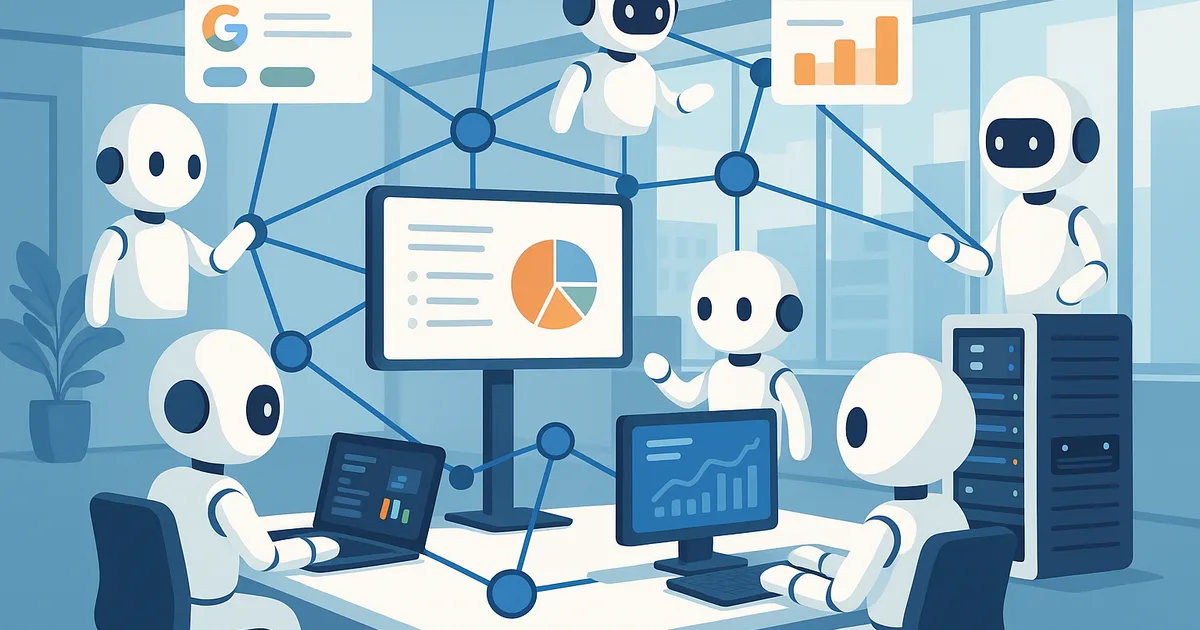
One significant trend is the shift from isolated AI agents to coordinated multi-agent systems. Instead of a single agent managing an entire workflow, enterprises are deploying networks of specialized agents, each responsible for specific functions, with an orchestrator overseeing the overall task. This architecture mirrors expert teams, where different agents handle research, analysis, drafting, and review, resulting in faster execution, improved quality control, and greater resilience. For businesses looking to implement these systems, understanding best practices for seamless integration is crucial.
Integration of Agentic AI into Core Enterprise Platforms
Agentic AI is increasingly being embedded directly into core enterprise platforms, moving beyond standalone applications. This integration allows AI agents to access and interact with enterprise data seamlessly, enabling more intelligent, personalized, and adaptive operations. As a result, businesses can achieve more efficient workflows and enhanced decision-making processes.
Evolution Towards Self-Managing Autonomous Workflows
Agentic systems are progressing beyond automation into self-regulation. These systems can now monitor their performance, identify inefficiencies, and make adjustments without human intervention. This evolution leads to more resilient and adaptive workflows, capable of responding to changing conditions and requirements in real-time.
Adoption of Small Language Models for Specialized Tasks
While large language models (LLMs) have been instrumental in advancing AI capabilities, there's a growing recognition of the value of small language models (SLMs) for specialized tasks within agentic systems. SLMs are more efficient and cost-effective, making them suitable for repetitive, domain-specific applications where general-purpose conversational abilities are less critical.
Emphasis on Governance and Security in Agentic AI Deployment
As agentic AI systems become more autonomous and interconnected, governance and security have emerged as critical considerations. Enterprises are focusing on developing robust frameworks to ensure AI behavior aligns with organizational policies and values. This includes implementing built-in governance mechanisms and addressing new cybersecurity risks associated with autonomous systems.
Integration of Agentic AI with Unified Commerce Platforms
In the e-commerce sector, agentic AI is being integrated with unified commerce platforms to provide seamless, personalized customer experiences. By synchronizing inventory, pricing, orders, and customer data across channels, businesses can leverage AI agents to automate and optimize various aspects of the customer journey, enhancing satisfaction and loyalty.
Strategic Approaches to Managing a Silicon-Based Workforce
The rise of agentic AI is prompting organizations to rethink workforce dynamics, viewing AI agents as a "silicon-based workforce" that complements human talent. This approach involves redesigning operations to integrate AI agents effectively, focusing on strategic deployment, governance, and continuous monitoring to maximize productivity and innovation. Businesses can benefit from selecting the right agentic AI tool to support these initiatives.
Comparison of Large Language Models (LLMs) and Small Language Models (SLMs) in Agentic AI
Aspect | Large Language Models (LLMs) | Small Language Models (SLMs) |
|---|---|---|
Capabilities | General-purpose, versatile | Specialized, task-specific |
Resource Efficiency | High computational demand | Lower computational demand |
Cost | More expensive to deploy | More cost-effective |
Use Cases | Broad applications | Repetitive, domain-specific tasks |
FAQs
What is agentic AI?
Agentic AI refers to autonomous agents capable of executing complex tasks without human intervention, enabling more efficient and adaptive workflows.
How do multi-agent systems enhance productivity?
Multi-agent systems involve networks of specialized agents collaborating on specific functions, resulting in faster execution, improved quality control, and greater resilience in workflows.
Why are small language models gaining traction in agentic AI?
Small language models are more efficient and cost-effective for specialized, repetitive tasks within agentic systems, making them suitable for domain-specific applications.
What are the security considerations for deploying agentic AI?
Deploying agentic AI requires robust governance frameworks to ensure AI behavior aligns with organizational policies and values, addressing new cybersecurity risks associated with autonomous systems.
How is agentic AI transforming e-commerce?
Agentic AI is integrated with unified commerce platforms to automate and optimize various aspects of the customer journey, providing seamless, personalized experiences and enhancing customer satisfaction.
Related Articles


Don't miss what ships next
The daily briefing on AI & tech, straight to your inbox.
Written by
Vunsh MehtaI’m a computer science student and developer focused on AI, automation, and emerging tech. I write about AI news, tools, and trends from a practical, builder-focused perspective.