Agentic AI: Revolutionizing Workflows with Autonomous Agents
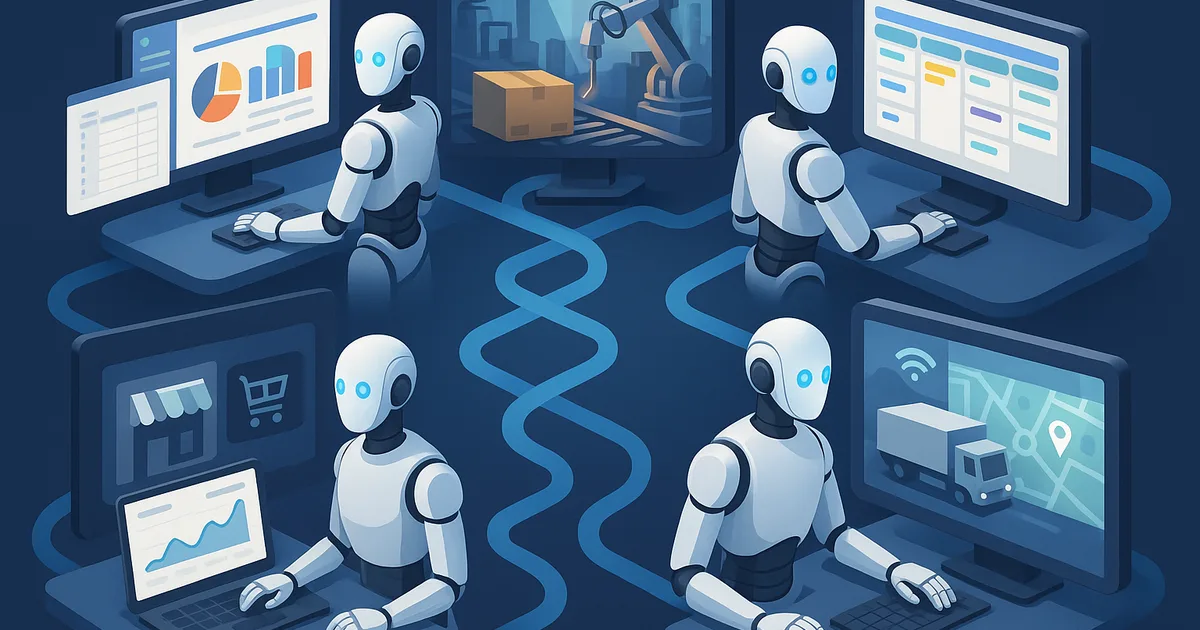
Agentic AI is transforming workflows by introducing autonomous agents capable of executing complex tasks without human intervention.
Get the daily AI & tech briefing.
Agentic AI: Revolutionizing Workflows with Autonomous Agents
Understanding Agentic AI and Its Role in Modern Workflows
Agentic AI refers to autonomous artificial intelligence systems capable of independently planning, executing, and managing tasks without human intervention. Unlike traditional AI models that require explicit instructions for each task, agentic AI systems can interpret goals, devise strategies, and adapt to changing conditions, making them invaluable in complex and dynamic environments. For businesses looking to leverage these capabilities, understanding how to select the right agentic AI tool for your business is crucial.
The Evolution from Traditional Automation to Autonomous Agents
Traditional automation relies on predefined rules and scripts to perform specific tasks. While effective for repetitive and predictable processes, this approach lacks flexibility and adaptability. Agentic AI, on the other hand, introduces a paradigm shift by enabling systems to reason, plan, and act autonomously. This evolution allows for the handling of complex, multi-step workflows that were previously beyond the reach of conventional automation. Implementing these advanced systems requires understanding best practices for seamless integration of agentic AI.
Key Components and Capabilities of Agentic AI Systems
Agentic AI systems are built upon several core components:
- Reasoning and Planning: The ability to analyze objectives and devise strategies to achieve them.
- Tool Utilization: Accessing and employing various tools and resources to execute tasks.
- Memory and Learning: Retaining information from past experiences to inform future actions.
- Adaptability: Adjusting strategies and actions in response to changing environments and data.
These capabilities enable agentic AI to perform tasks ranging from simple data entry to complex decision-making processes. Understanding these components is key to optimizing workflows with agentic AI.
Transforming Workflows Across Industries with Agentic AI
Agentic AI is revolutionizing workflows in various sectors:
- Software Development: Autonomous coding agents can implement features, fix bugs, and manage deployments, leading to productivity improvements of 2-4 times.
- Customer Service: AI agents handle inquiries and resolve issues, resulting in a 40-60% reduction in ticket volumes within months.
- Healthcare: Automating compliance workflows and patient data analysis enhances efficiency and accuracy.
- Finance: AI agents manage risk assessments and fraud detection, improving decision-making processes.
- E-commerce: Autonomous agents perform transactions on behalf of users, streamlining the shopping experience.
These transformations are further illustrated in case studies of the transformative impacts of agentic AI in industries.
Implementing Agentic AI: Strategies and Considerations
To successfully integrate agentic AI into organizational workflows, consider the following strategies:
- Identify Suitable Processes: Focus on high-volume, repetitive, and well-documented tasks for initial implementation.
- Ensure Data Quality: High-quality, structured data is essential for effective AI performance.
- Develop Robust Infrastructure: Invest in scalable and efficient computing resources to support continuous AI operations.
- Establish Governance Frameworks: Implement policies for oversight, accountability, and ethical AI use.
- Foster Human-AI Collaboration: Train employees to work alongside AI agents, focusing on tasks requiring human judgment and creativity.
Overcoming Challenges in Adopting Agentic AI
Organizations may face several challenges when adopting agentic AI:
- Data Management: Handling unstructured or poor-quality data can impede AI effectiveness.
- Legacy Systems Integration: Outdated infrastructure may not support advanced AI capabilities.
- Change Management: Resistance from employees due to fear of job displacement.
- Security and Compliance: Ensuring AI systems adhere to regulatory standards and protect sensitive information.
Addressing these challenges requires a comprehensive approach, including investing in data management solutions, upgrading infrastructure, providing employee training, and implementing robust security measures.
Measuring the Impact of Agentic AI on Productivity and Innovation
The impact of agentic AI can be assessed through various metrics:
- Efficiency Gains: Reduction in time and resources required to complete tasks.
- Error Reduction: Decrease in mistakes due to automated processes.
- Employee Satisfaction: Improved job satisfaction as employees focus on higher-value tasks.
- Innovation: Increased capacity for innovation due to freed-up resources.
Future Trends and Developments in Agentic AI
The future of agentic AI includes:
- Enhanced Autonomy: AI agents will handle more complex tasks with minimal human oversight.
- Interoperability: Improved integration across different systems and platforms.
- Personalization: AI agents tailored to individual user preferences and behaviors.
- Ethical AI: Development of frameworks to ensure responsible and fair AI usage.
For a deeper understanding of these developments, explore future trends in agentic AI.
Comparison of Traditional Automation and Agentic AI
Aspect | Traditional Automation | Agentic AI |
|---|---|---|
Flexibility | Limited to predefined rules and scripts | Adapts to changing conditions and tasks |
Complexity Handling | Struggles with complex, multi-step processes | Excels in managing intricate workflows |
Learning Capability | Lacks the ability to learn from past experiences | Continuously learns and improves over time |
Human Intervention | Requires constant oversight and input | Operates autonomously with minimal human involvement |
Scalability | Challenging to scale without significant reprogramming | Easily scales to handle increased workload and complexity |
For companies evaluating different solutions, comparing agentic AI tools can provide insights into the best options available.
Conclusion
Agentic AI is transforming workflows by introducing autonomous agents capable of executing complex tasks without human intervention. By understanding and implementing these systems, organizations can enhance productivity, drive innovation, and maintain a competitive edge in an increasingly automated world.
FAQs
What is agentic AI?
Agentic AI refers to autonomous artificial intelligence systems capable of independently planning, executing, and managing tasks without human intervention.
How does agentic AI differ from traditional automation?
Unlike traditional automation, which relies on predefined rules, agentic AI can reason, plan, and adapt to changing conditions, handling complex and dynamic tasks.
What industries benefit from agentic AI?
Industries such as software development, customer service, healthcare, finance, and e-commerce benefit from agentic AI by automating complex workflows and enhancing productivity.
What are the challenges in adopting agentic AI?
Challenges include data management issues, integrating with legacy systems, managing organizational change, and ensuring security and compliance.
How can organizations measure the impact of agentic AI?
Organizations can measure impact through efficiency gains, error reduction, employee satisfaction, and increased capacity for innovation.
Related Articles



Don't miss what ships next
The daily briefing on AI & tech, straight to your inbox.
Written by
Zach GreeneI write about the tools, trends, and breakthroughs shaping the future of AI, breaking down complex ideas into clear, actionable insights. From emerging startups to the latest in AI tech, I focus on what actually matters and what’s worth paying attention to. My goal is to help you stay ahead in a rapidly evolving space.