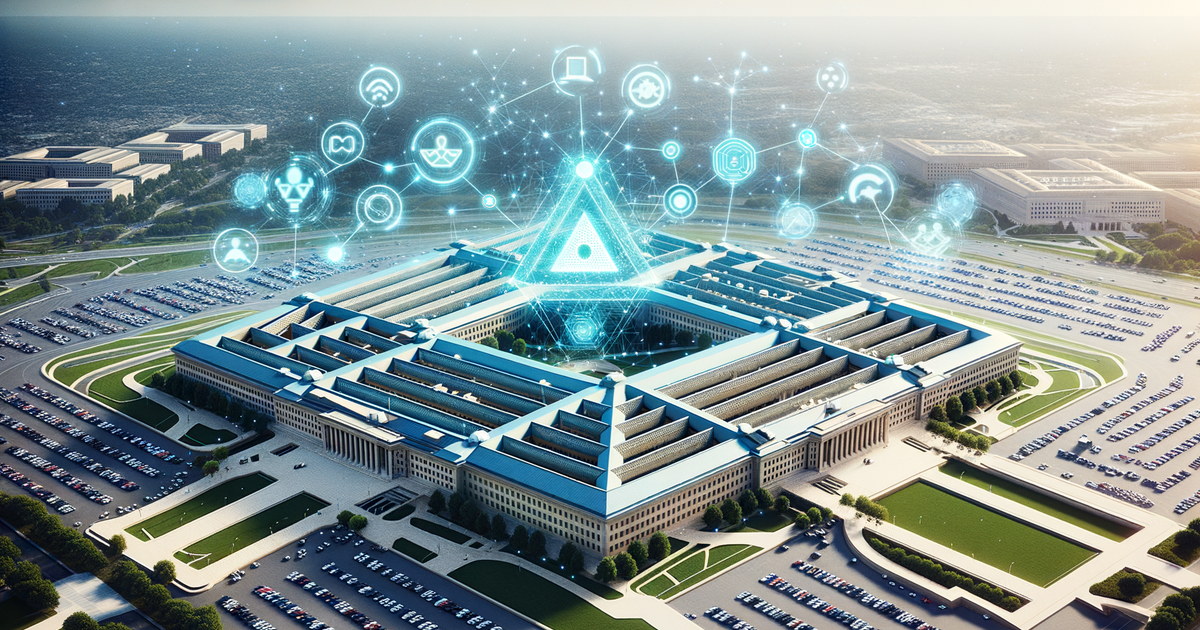
Pentagon's AI Strategy: A Closer Look at the Latest Partnerships and Exclusions
The Pentagon's recent AI partnerships signal a strategic shift, notably excluding Anthropic due to security concerns.

Get the daily AI & tech briefing.
Pentagon's AI Strategy: A Closer Look at the Latest Partnerships and Exclusions
The Department of Defense (DoD) has recently announced significant partnerships with leading artificial intelligence (AI) companies to enhance its classified networks. This move underscores the Pentagon's commitment to integrating advanced AI technologies into national defense strategies. However, the notable exclusion of Anthropic, a prominent AI firm, raises questions about security considerations and the future landscape of AI collaborations within the defense sector.
The Pentagon's New AI Partnerships: Who's In?
On May 1, 2026, the DoD revealed agreements with seven major AI companies: SpaceX, OpenAI, Google, NVIDIA, Reflection, Microsoft, and Amazon Web Services. These partnerships aim to deploy AI systems within classified Pentagon networks, enhancing data synthesis, situational understanding, and decision-making capabilities in highly secure environments. The inclusion of these tech giants reflects the Pentagon's strategy to leverage cutting-edge AI technologies to maintain a competitive edge in modern warfare.
The Exclusion of Anthropic: Security Concerns Take Center Stage
Conspicuously absent from the list of partners is Anthropic, a leading AI research lab. The DoD has designated Anthropic as a supply-chain risk to U.S. national security, leading to its exclusion from these critical partnerships. This decision highlights the Pentagon's prioritization of security and trustworthiness in its AI collaborations, emphasizing the need for stringent vetting processes to protect sensitive information and operations.
Implications for Anthropic and the AI Industry
Anthropic's exclusion from the Pentagon's AI initiatives could have significant repercussions for the company and the broader AI industry. It may prompt other organizations to reassess their security protocols and supply-chain practices to align with national security standards. Additionally, this move could influence future collaborations between AI firms and government agencies, setting a precedent for the level of scrutiny and trust required in such partnerships.
The Role of AI in Modern Defense Strategies
The integration of AI into defense strategies offers numerous advantages, including enhanced data analysis, improved decision-making, and increased operational efficiency. The Pentagon's recent partnerships aim to harness these benefits by deploying AI systems within classified networks. However, the exclusion of certain companies due to security concerns underscores the complexities involved in balancing technological innovation with national security imperatives.
Future Prospects: Balancing Innovation and Security
As the DoD continues to integrate AI into its operations, it faces the challenge of fostering innovation while ensuring security. Establishing clear guidelines and robust vetting processes for AI partnerships will be crucial in achieving this balance. The recent developments suggest a trend toward more stringent security measures in AI collaborations, which could shape the future landscape of AI integration in defense.
Conclusion: Navigating the Intersection of AI and National Security
The Pentagon's recent AI partnerships and the exclusion of Anthropic highlight the intricate relationship between technological advancement and national security. As AI continues to play a pivotal role in defense strategies, ensuring the security and reliability of AI systems becomes paramount. The DoD's actions reflect a cautious yet forward-looking approach to integrating AI into national defense, setting the stage for future developments in this critical area.
FAQ
Why did the Pentagon exclude Anthropic from its AI partnerships?
The Department of Defense designated Anthropic as a supply-chain risk to U.S. national security, leading to its exclusion from recent AI partnerships aimed at enhancing classified networks.
Which companies did the Pentagon partner with for AI integration?
The Pentagon announced partnerships with SpaceX, OpenAI, Google, NVIDIA, Reflection, Microsoft, and Amazon Web Services to deploy AI systems within its classified networks.
What are the objectives of the Pentagon's AI partnerships?
The partnerships aim to enhance data synthesis, situational understanding, and decision-making capabilities within the Pentagon's classified environments by integrating advanced AI technologies.
How does the exclusion of Anthropic impact the AI industry?
Anthropic's exclusion may prompt other AI firms to reassess their security protocols and supply-chain practices to align with national security standards, potentially influencing future collaborations with government agencies.
What challenges does the Pentagon face in integrating AI into defense strategies?
The Pentagon must balance fostering technological innovation with ensuring national security, requiring clear guidelines and robust vetting processes for AI partnerships to protect sensitive information and operations.
Related Articles



Don't miss what ships next
The daily briefing on AI & tech, straight to your inbox.
Written by
Vunsh MehtaI’m a computer science student and developer focused on AI, automation, and emerging tech. I write about AI news, tools, and trends from a practical, builder-focused perspective.