Future Trends in Multimodal AI Development
Exploring future trends in multimodal AI development, focusing on upcoming advancements and their potential impacts. Learn about emerging AI trends and applications.

Get the daily AI & tech briefing.
Understanding the Evolution: What is Multimodal AI?
Multimodal AI is transforming the way machines interact with the world by processing more than one type of data at a time. Unlike traditional AI systems that focus solely on text or image data, multimodal AI combines input from various sources like text, images, audio, and video. This synthesis enhances understanding and decision-making, paving the way for more holistic applications. To better understand how these technologies come together, explore harnessing multimodal AI.
Why Multimodal AI?
The world is inherently multimodal. Humans process information through a variety of senses, and AI that mimics this ability can revolutionize interaction. For instance, an AI that understands both the visual details of an image and the emotional tone of accompanying audio can make more nuanced recommendations. For those looking to implement these systems effectively, consider best practices for integrating multimodal AI in applications.
Driving Forces: Emerging Trends in Multimodal AI
Integration with IoT Devices
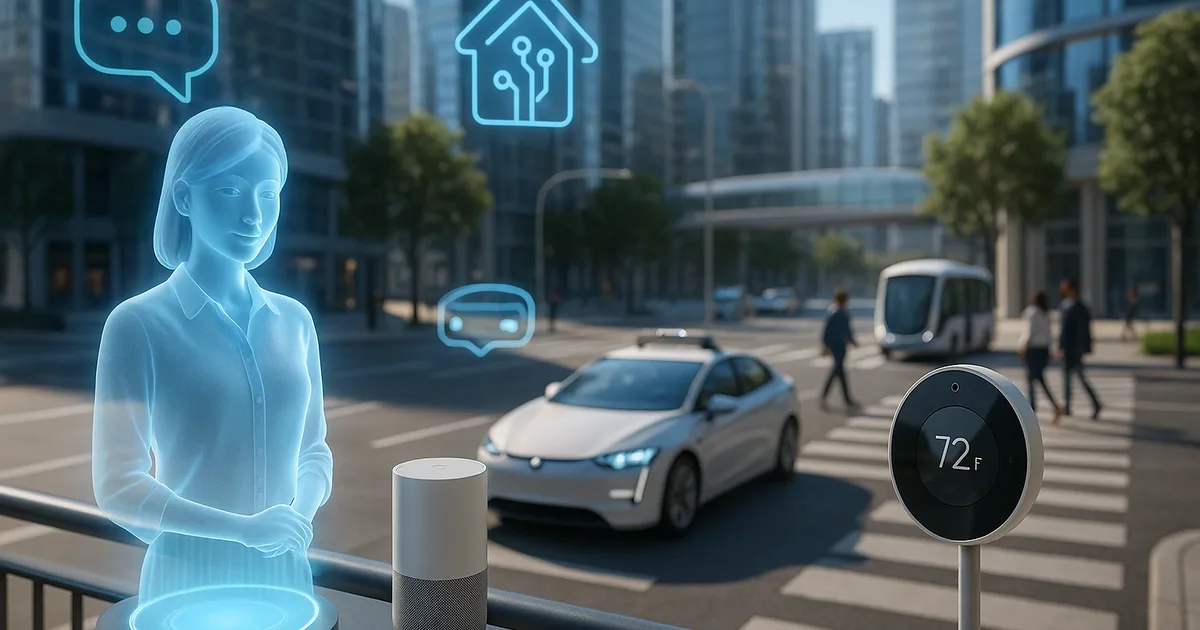
One of the emerging trends is the integration of multimodal AI with IoT devices. Smart homes and cities are leveraging these models to create responsive environments. Imagine a smart assistant not only responding to voice commands but also recognizing gestures and facial expressions.
Enhanced Human-AI Interactions
The development of emotionally intelligent AI is on the rise. By combining text analysis with tone detection and facial recognition, AI can interpret user emotions. This creates applications in fields like virtual therapy where AI responds empathetically to human cues. For real-world examples, look into exploring real-world case studies of multimodal AI.
Scaling Up: Advancements in AI Hardware
Improved Processing Capabilities
The need for powerful hardware is crucial as multimodal AI models grow larger and more complex. Advances in GPUs and TPUs have significantly boosted processing capabilities, allowing for real-time interpretation and response.
Quantum Computing Potential
Quantum computing holds the potential to revolutionize multimodal AI by offering unprecedented computing power. This can lead to the processing of complex datasets in seconds, opening up possibilities we are only beginning to imagine.
Bridging Gaps: Innovations in Model Design
Transformer Architectures
The refinement of transformer architectures is a major advancement. From BERT to GPT models, these architectures have become instrumental in handling complex tasks involving multiple data types. They enable the seamless integration of diverse data sources into a unified output.
Contrastive Learning
Contrastive learning is enhancing how multimodal models learn from less data, improving their efficiency. This paradigm helps models understand relationships across data types and learn from comparative analysis rather than explicit labels.
Practical Applications: Real-world Use Cases
Multimodal Healthcare Diagnostics
In healthcare, multimodal AI is being utilized for diagnostics by analyzing medical images along with patient history and symptoms. It enhances diagnostic accuracy and tailors treatment plans. For example, an AI system could combine MRI results with patient data to suggest more accurate diagnoses.
Enhanced Content Creation
Content creation is another area benefiting from multimodal AI, with platforms generating text, images, and videos concurrently. This aids in producing cohesive marketing campaigns where visual and textual content align perfectly.
Evaluating Impacts: Benefits and Challenges
Benefits
- Holistic Interpretation: Better analysis through integrated data sources.
- Improved Accessibility: Enables interactions through various modes suited to different abilities.
Challenges
- Data Privacy: Handling sensitive multimodal data requires strict privacy standards.
- Bias Amplification: Ensuring AI models do not perpetuate biases across multiple modalities.
Looking Ahead: Future AI Development Predictions
Democratization of AI
As AI advancements continue, tools and frameworks are becoming more accessible. This democratization of AI ensures that smaller enterprises can leverage these powerful technologies without prohibitive costs.
Cross-Disciplinary Collaborations
Future AI development will increasingly involve collaborations across disciplines. By bridging gaps between fields like neuroscience and computer science, more innovative and effective solutions will emerge.
Table: Comparative Analysis of AI Development Phases
Development Phase | Characteristics | Key Technologies |
|---|---|---|
Narrow AI | Task-specific, no cross-interaction | Machine Learning, SVMs |
Multimodal AI | Cross-modal integration, holistic understanding | Transformers, Deep Learning |
Artificial General AI | Human-like intelligence, adaptable | Emerging, largely theoretical |
FAQ
- What is multimodal AI?
Multimodal AI processes and synthesizes data from multiple sources such as text, images, audio, and video.
- Why is multimodal AI important?
It allows for richer data interpretation and more nuanced interaction, enhancing decision-making processes.
- What are the challenges of multimodal AI?
Key challenges include data privacy concerns and the risk of bias amplification across different data types.
- How does multimodal AI impact healthcare?
It improves diagnostic accuracy by integrating diverse data sources like medical images and patient history.
- What is the future of multimodal AI?
Future trends include democratization of AI and enhanced collaboration across various scientific disciplines.
Related Articles

Don't miss what ships next
The daily briefing on AI & tech, straight to your inbox.
Written by
Vunsh MehtaI’m a computer science student and developer focused on AI, automation, and emerging tech. I write about AI news, tools, and trends from a practical, builder-focused perspective.